A Conversation With Myself

Where me, myself, and I critique my works.

  • Q: What is the difference between a duck?
  • Q: Who is this James when he’s at home?

The Passing of Eras

Posted by jamestrexler on February 26, 2020
Posted in: History, NASA, Space Exploration. Leave a comment

Normal Me: Detour!
Snarky Me: What?
Nerdy Me: An unplanned stop or redirection.
Snarky Me: I know what the word means, you ponce, why is he saying it?
Nerdy Me: Oh, right, well you know how we were setting up the Snark as one of our topics to cover?
Snarky Me: Yeah, of course the King of Snark is aware.
Normal Me: Um…right…well events conspired such that we made a slight detour from that plan.
Nerdy Me: Yes, it just so happens that we passed the 58th anniversary of the launch of Friendship 7 last week on 20 February.
Artistic Me: That’s John Glenn’s flight, right?
Nerdy Me: Yep! The first manned American spaceflight to orbit the Earth.
Normal Me: Exactly, so we decided to check out its launch site, Launch Complex 14 and report in from there.
Nerdy Me: But before we get to that, there’s some more recent news.
Artistic Me: Sad news.
Normal Me: Yes, very sad.
Nerdy Me: For those of you who don’t know, we’re talking about the recent passing of Katherine Johnson on 24 February.
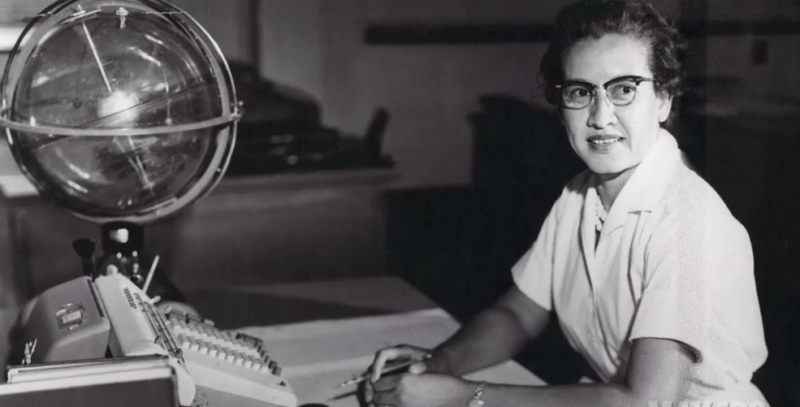
Katherine Johnson at her desk. Photo courtesy of NASA

Figure 1: Katherine Johnson, NASA mathematician and legend. Photo courtesy of NASA

Normal Me: She’s one of the NASA employees featured in the film “Hidden Figures”.
Snarky Me: I mean, she was more or less the star. Certainly nothing against the other two, Dorothy Vaughan and Mary Jackson who are remarkable in their own right and very much worth looking into.

(Nerdy Me: Vaughan was a mathematician and the first female African-American supervisor at Langley and was given one of my all-time favourite lines in the film, “FORTRAN is a new and exciting language…”
Snarky Me: You were the only one in the whole theatre to laugh at that.
Nerdy Me: FORTRAN is 65 years old!
Normal Me: Well it was new at the time.
Nerdy Me: There were things still code in FORTRAN when James started working…
Artistic Me: Wait, what?
Snarky Me: What was still using FORTRAN?
Nerdy Me: A good question, for another time.)

(Normal Me: Jackson was NASA’s first female African American Engineer.
Nerdy Me: She even earned the most senior title in her whole department.
Artistic Me: Where did she go from there?
Nerdy Me: She actually took a step down on the ladder and transitioned to the Equal Opportunity and Affirmative Action programs.
Artistic Me: Impressive and respectable devotion and motivation.
Normal Me: I’m sure she managed to inspire and support many deserving individuals who might not have otherwise had the same opportunities.)

Normal Me: Ahem, now then, back to Katherine Johnson, the film most directly followed her story, probably because of the direct impact it had on John Glenn’s launch.
Nerdy Me: Supposedly Glenn only consented to launch after he got confirmation that Johnson had checked the numbers herself.
Artistic Me: Yeah, that was one of my favourite moments in the film. Heck yeah, listen to the woman!
Nerdy Me: She knew her stuff, that’s for sure. Trust us, we know how difficult this math is.
Snarky Me: Through many long, sad nights of equations and code.
Normal Me: She didn’t even have code for this, at least not the kind we use now.
Nerdy Me: Somehow they managed to get folks to the moon with less than a modern pocket calculator’s worth of processing power.
Normal Me: Johnson even worked on getting Apollo 11 to the moon and getting Apollo 13 home safely.
Artistic Me: How was she not more well-known?
Snarky Me: Um, it was the ‘60s.
Artistic Me: Oh…right.
Normal Me: But hey, now we have “Hidden Figures”!
Snarky Me: About time.
Artistic Me: True, didn’t you grab the book when you visited the Civil Rights institute in Birmingham?
Nerdy Me: I did, yes. It’s on my to-do list, but maybe I’ll read it once we have all the books unpacked next week.
Normal Me: At any rate, Katherine Johnson is a hero of the space program and lived to the ripe old age of 101, sadly making her the only one of the trio featured in the film to actually see it.
Artistic Me: According to her, the segregation shown was more extreme than what she actually experienced, but it was very important to show not so much for the story but for popular awareness of the challenges faced by the average person in the era.
Sports Fan Me: Did she enjoy the film?
Normal Me: I’m not sure, I hope she did.
Artistic Me: Well one way or another, I’m glad it was made and that their story has been popularized. I think they’re great examples of perseverance.
Sports Fan Me: That they are. We should do something to commemorate them!
Nerdy Me: We’re working on it. Well, technically we have been for, uh, seven years?
Snarky Me: Twelve, depending on how you count it.
Artistic Me: Yes, though the attachment of the commemoration to that project is relatively recent.
Sports Fan Me: What project? Is this an old starship thing?
Nerdy Me: Yes, actually, remember the old Cambria Class?
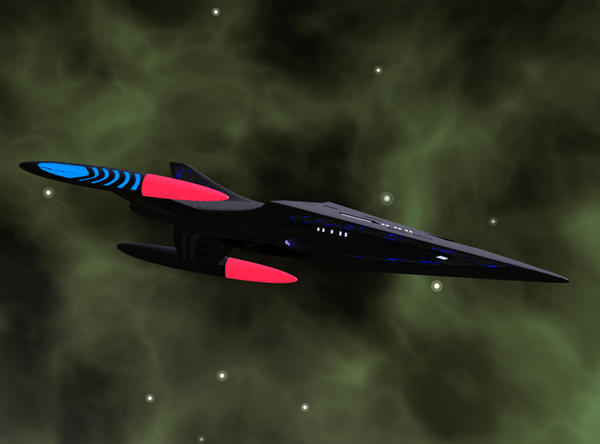
Figure 2: The Original Cambria Class starship design, circa 2008

Snarky Me: This clunker?
Normal Me: Er, yes, that, and the second attempt…
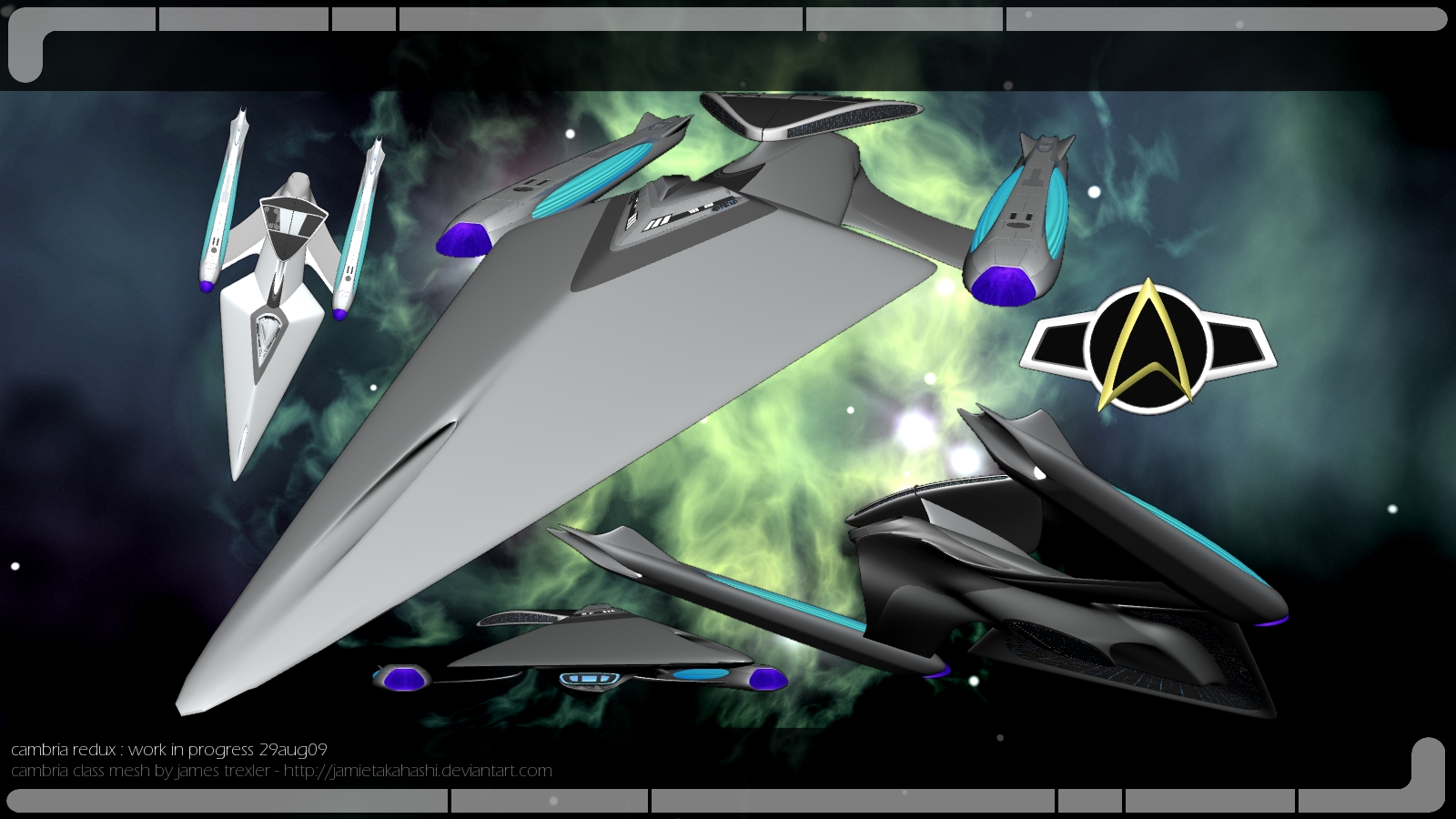

Figure 3: The Second Cambria Class starship design, circa 2009

Normal Me: And the most recent one…
Curie Class

Figure 4: Final Curie, nee Cambria, Class starship design, circa 2015

Nerdy Me: Well we’re actually going to finish that one, okay?
Snarky Me: That’s what you always say.
Normal Me: Well now there’s more investment in it, especially after we renamed it the Curie Class last year.
Artistic Me: Oh? I approve of that name.
Nerdy Me: Yeah, we decided every ship of the class would be named for a female STEM figure.
Normal Me: In this case, there’ll be a USS Johnson, NCC-101918.
Sports Fan Me: Oh cool! I hope she’d approve.
Artistic Me: As do I.
Snarky Me: Now bloody well finish the model!
Nerdy Me: And 3D print it?
Normal Me: And 3D print it. Now then, in commemoration of both the launch’s 58th anniversary and the life and work of one of the women who made it possible, welcome to Launch Complex 14!

Figure 5: The Approach to Launch Complex 14

…
…
Snarky Me: I can hear the crickets.
Normal Me: Well…here’s a video for you to cover how important the site is, courtesy of the Air Force Space & Missile Museum Foundation:

Nerdy Me: Shouldn’t there be hoopla and fanfare for this? I mean, weren’t these pictures taken on the anniversary itself?
Normal Me: Maybe. You’d hope. But by the time we got there, nobody was there. Noooooboooody.
Artistic Me: So…yeeting ensued?
Normal Me: Well actually there’s a lot less of a need for yeeting here. It’s a bit more well maintained than some of the other locations.
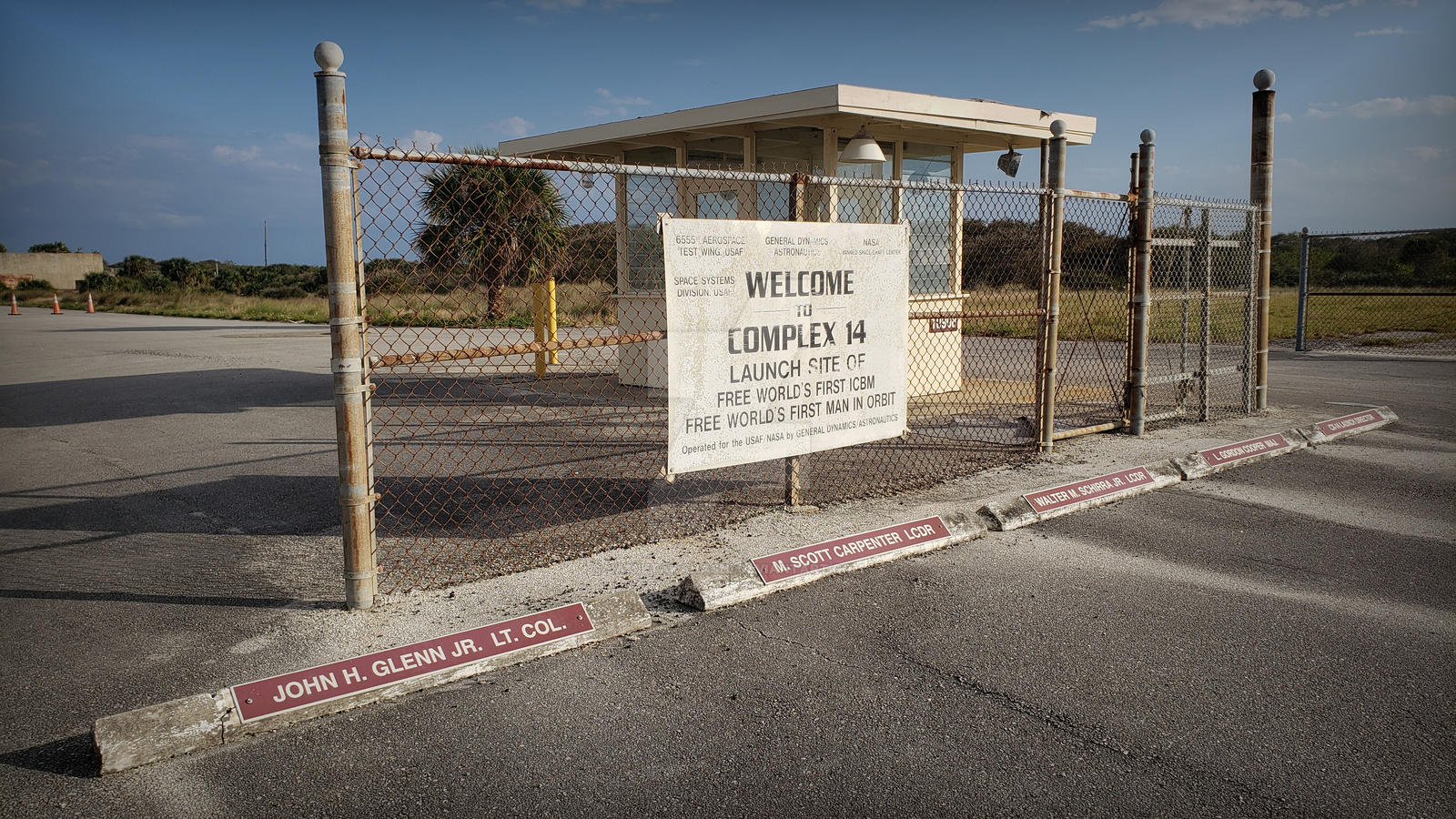
Figure 6: Parking at Launch Complex 14

Snarky Me: The signage is interesting and apparently fairly well preserved, I guess. Artistic Me: Gotta love that Cold War “free world” reference.
Normal Me: Plus those parking spaces, one for each Mercury-Atlas astronaut.
Nerdy Me: And the Launch Director!
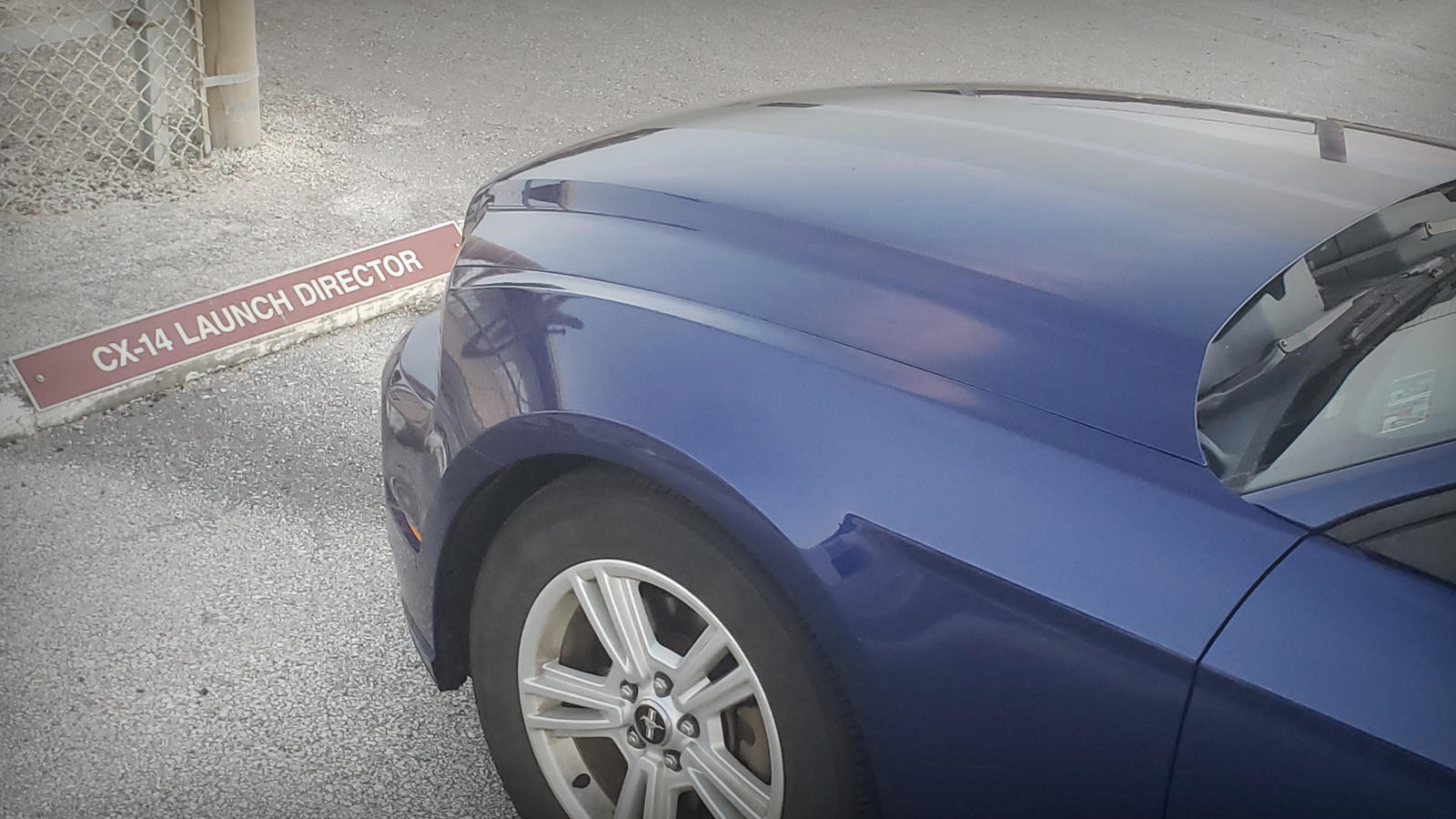
Figure 7: Parked at the Launch Director’s Spot

Nerdy Me: Heh, couldn’t resist parking there…
Artistic Me: There’s even a sign on the blockhouse with each launch! Granted, it’s a reproduction made in 1998, but still!
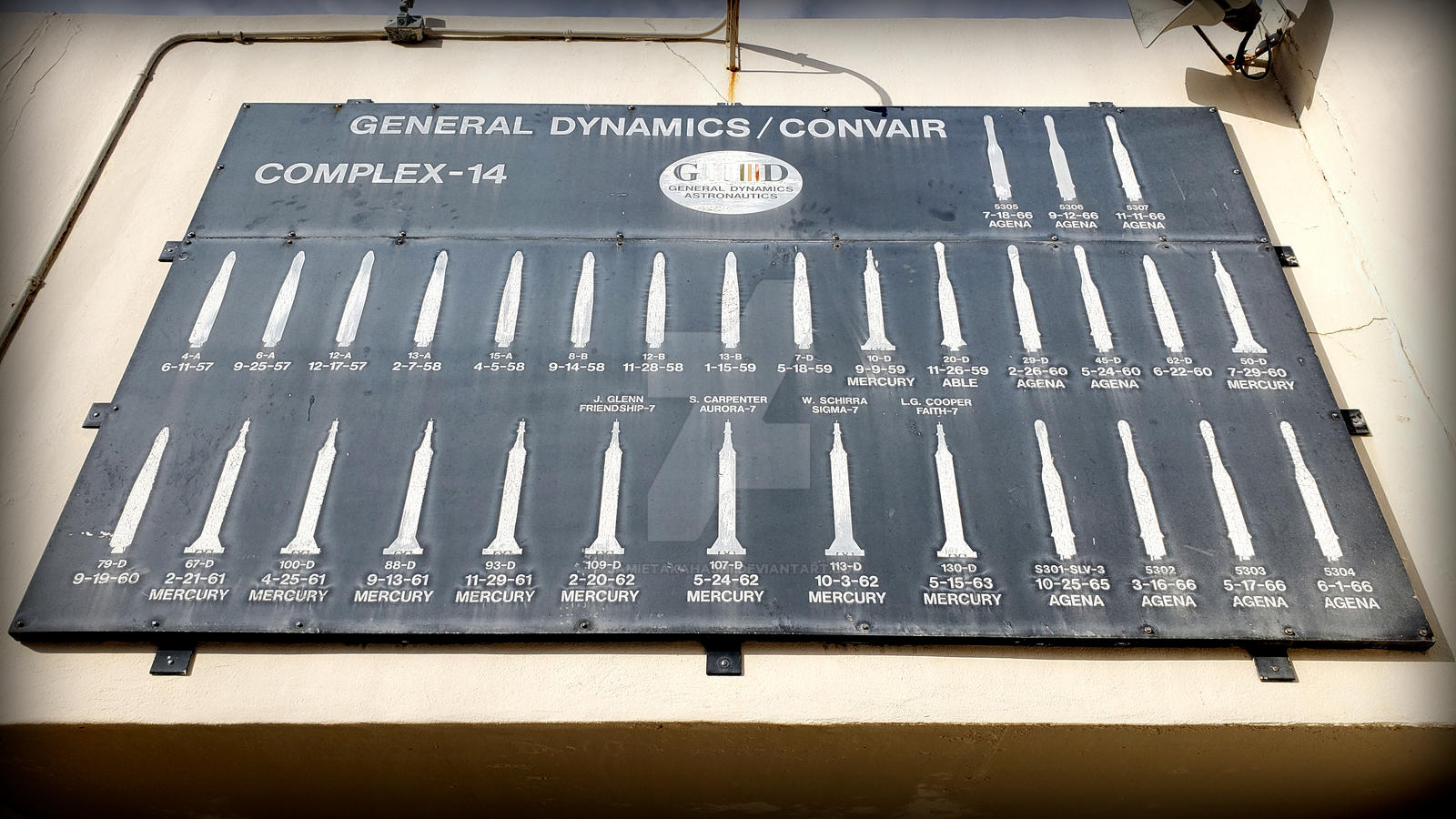
Figure 8: Launch Complex 14’s Launch Campaign Sign

Nerdy Me: Huh…It’s showing all the Mercury flights with Redstone silhouettes, how odd. Doubly odd considering it’s a sign made by General Dynamics’ Convair division, the people who, you know, built the Atlas?
Snarky Me: You’d think they’d have made sure it showed their own system. Huh.
Normal Me: Well that sign was up above a passage between a support building and the blockhouse itself which had a bit of a surprise in store.

Figure 9: Launch Complex 14’s Blockhouse Blast Door

Snarky Me: A vintage sign and a locked door behind an open blast door?
Normal Me: No, no, no, there happens to be a small sign on the door which has an active phone number to call… to get in.
Artistic Me: In, like, in in? Not yeeting in?
Normal Me: Yes, in in. They actually restored this blockhouse in the ‘90s to turn it into a conference center.
Nerdy Me: That’s awesome! So… we’re going in?
Normal Me: We’re going in.
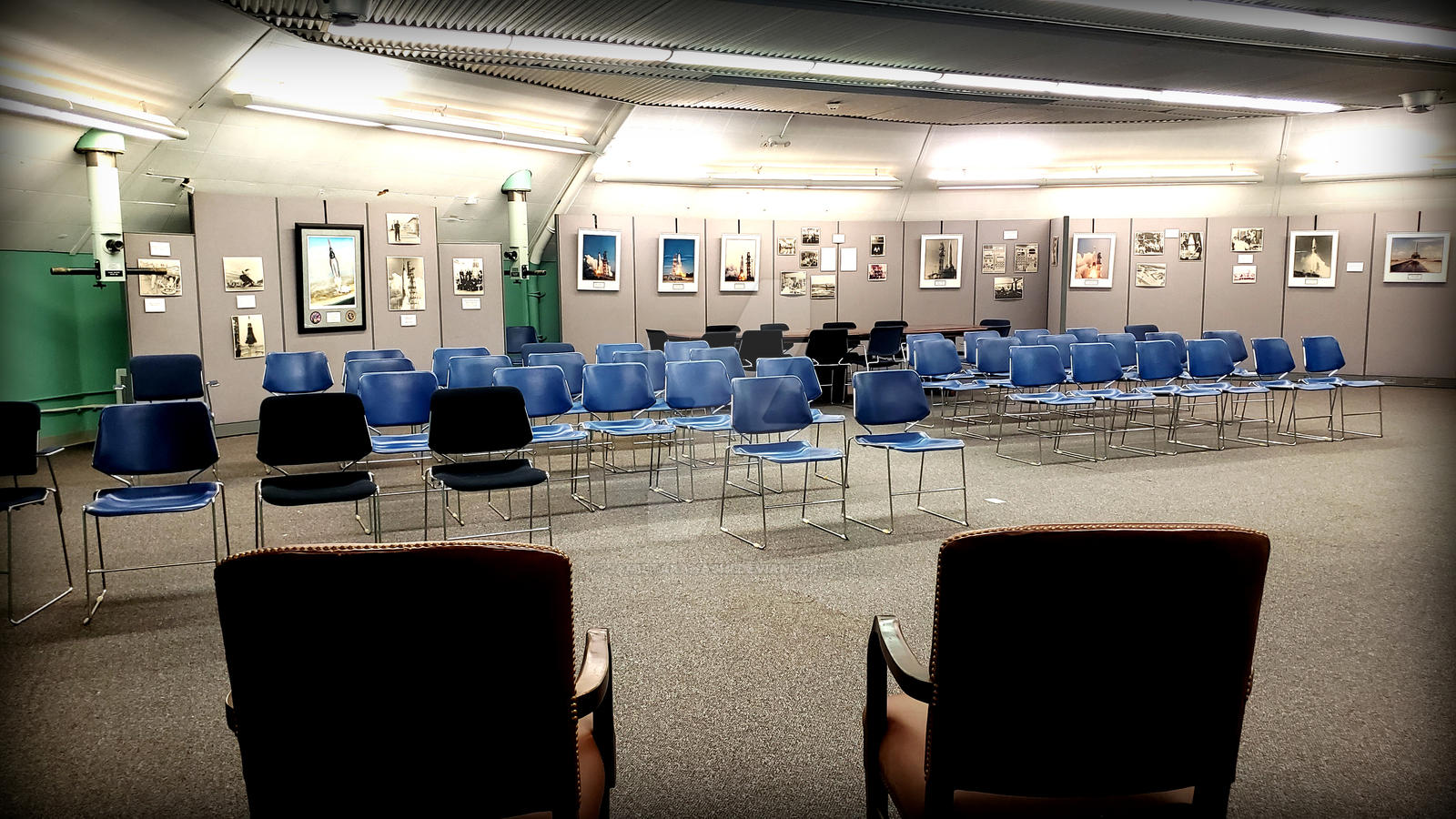
Figure 10: Launch Complex 14’s Blockhouse Interior

Snarky Me: So, this is what a classic blockhouse looks like, eh?
Normal Me: Well, yes and no. As we’d mentioned, the 45th Space Wing actually had the blockhouse renovated in the ‘90s and much of the original equipment was already gone. There’s not much original besides the periscopes and some of the flooring which, yeah, looks very much like it’s straight out of the 1950s.
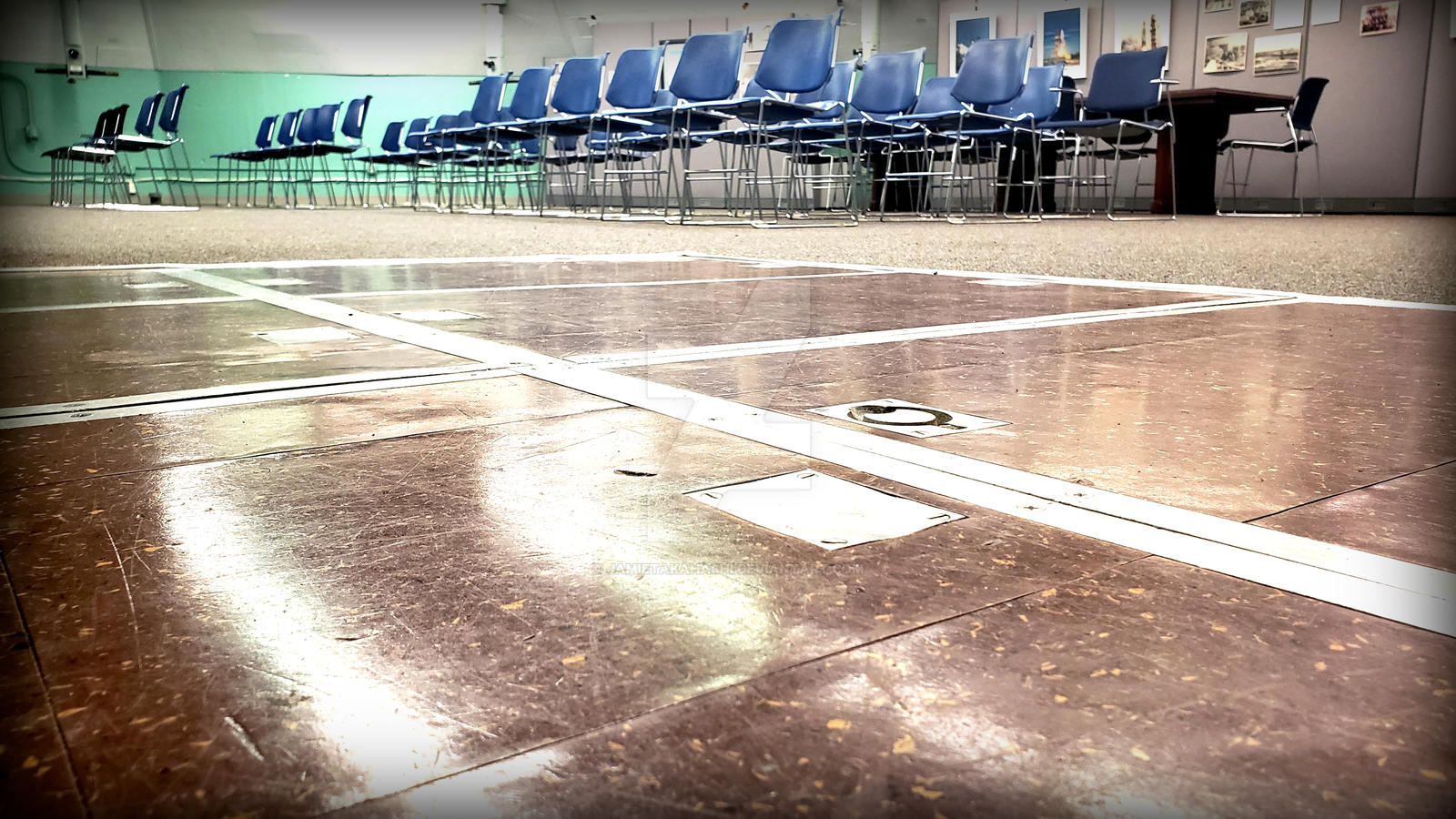
Figure 11: Original Launch Complex 14 Blockhouse Flooring

Nerdy Me: Here’s some comparisons of how things have changed over time.
LC14 Blockhouse Transition 1

Figure 12: Blockhouse activity versus current quietude, part 1. Archival images courtesy of the 45th Mission Support Group

LC14 Blockhouse Transition 2

Figure 13: Blockhouse activity versus current quietude, part 2. Archival images courtesy of the 45th Mission Support Group

Nerdy Me: The periscopes really steal the show, though.

Figure 14: Original Launch Complex 14 Blockhouse Periscopes

Artistic Me: The periscopes are especially fun, you can actually still look through them and get great views of the coast, the pad, and nearby launch complexes!
Nerdy Me: Essentially, they stopped adding windows to the blockhouses at one point and decided to have everything viewed on screens or periscopes.
Snarky Me: Cool, kinda, but sterile feeling.
Nerdy Me: Yeah, there’s nothing like actually watching the rocket go up, especially from that distance.
Snarky Me: There’s also nothing like needing a foot of bulletproof glass to do that…
Nerdy Me: Fair point, I guess.
Artistic Me: Well, they’re still nifty to look through. And I think there were stairs off to the side outside, weren’t there?
Normal Me: Yep! You can go all the way up to the top.
Nerdy Me: How’s the view up there?
Sports Fan Me: Spectacular.
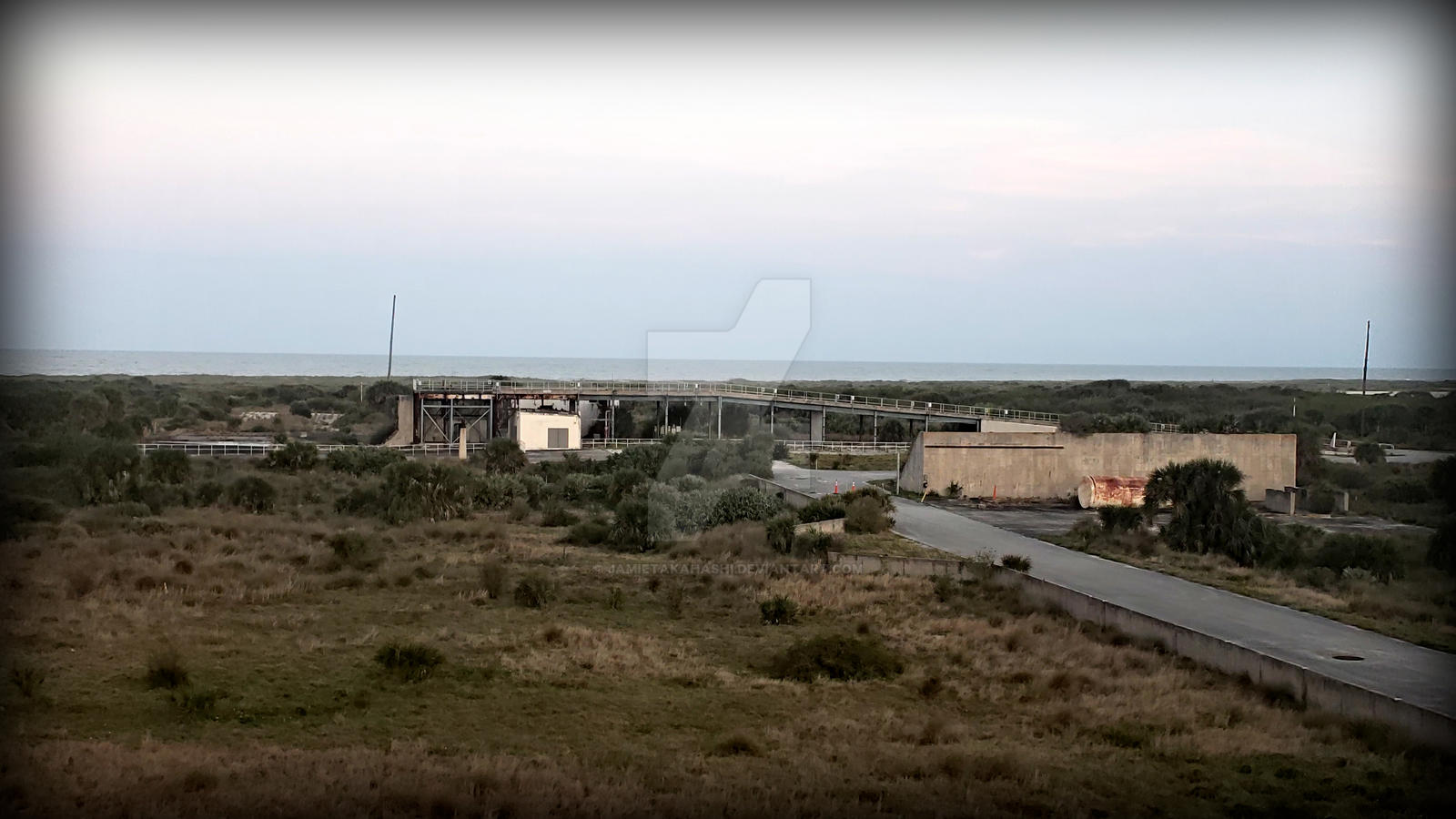
Figure 15: The Launch Complex 14 Pad as viewed from atop the Blockhouse

Artistic Me: I can see for miles and miles and miles and miles and miiiiiilllleeesssss…
Snarky Me: Nope. Nope.
Sports Fan Me: And we found a friend!
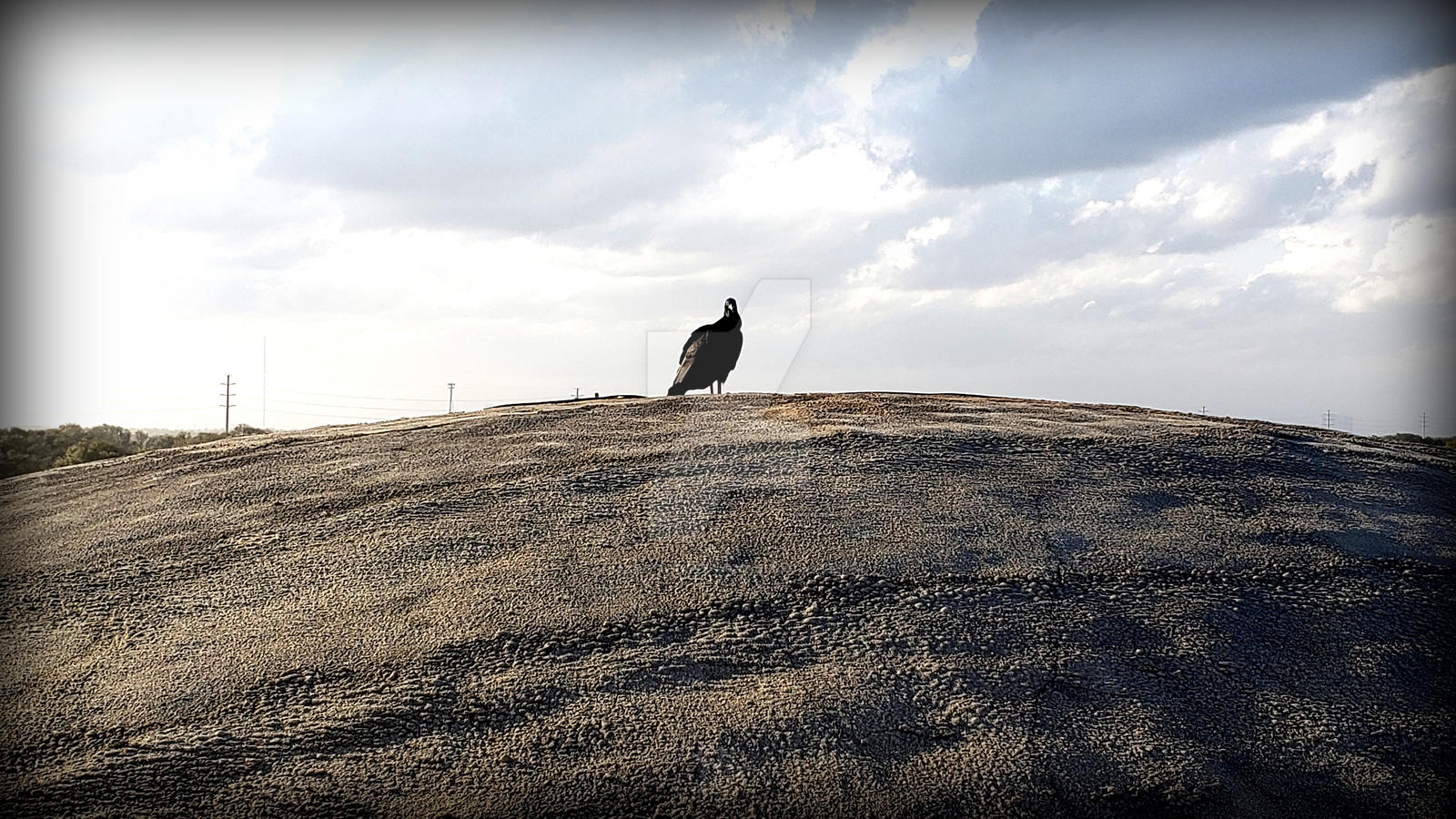
Figure 16: A feathered friend at Launch Complex 14

Snarky Me: Huh, how chill.
Artistic Me: Yeah, seems to be around there every day.
Normal Me: You sure it’s the same bird?
Artistic Me: No, but I like to think so.
Sports Fan Me: Was the platform original or added when they restored the Blockhouse?
Nerdy Me: I’m not entirely sure, original pictures from that side are hard to find. I mean, why would anyone take a picture of it from the direction facing away from the coolness that is the launch pad? That said, though, the steps are concrete and certainly seem like they were intentional. Parts of it may have been added, especially benches, but I wouldn’t be surprised if it was always meant to have it, especially given what we saw at Launch Complex 1-2.
Normal Me: Oh, and fun fact, there are images of it being constructed, we just didn’t find ones of the stairs.
LC14 Blockhouse Construction

Figure 17: The Blockhouse today compared to construction progress in 1956. Archival photo courtesy of the 45th Mission Support Group

Nerdy Me: Well that’s fun. And the concrete pillars, I’m curious if they’re still that height and subsumed under the additional concrete poured overtop or if they got knocked down a bit once construction was done to free up the periscopes.
Normal Me: Good question, but I almost think they’re still that tall, they just added that much concrete on top.
Snarky Me: That’s a ton of concrete.
Sports Fan Me: Many tons, actually.
Artistic Me: The view from up top, though, that was the launch pad in the distance?
Snarky Me: What’s left of it.
Artistic Me: Not much… more than Launch Complexes 1 and 2, but… no tower.
Nerdy Me: Yeah, that was brought down in 1976 because of all the corrosion.
Normal Me: Understandable, but disappointing.
Artistic Me: So what do we have out there now?
Nerdy Me: Well, I’m glad you asked!

Figure 18: A closer view of the Launch Complex 14 Pad

Sports Fan Me: A ramp and a few buildings. Can we go in? Please?
Normal Me: Maybe.
Snarky Me: Don’t encourage him!
Nerdy Me: At the base of the ramp is actually a marble memorial to the four manned launches that lifted off from this pad.
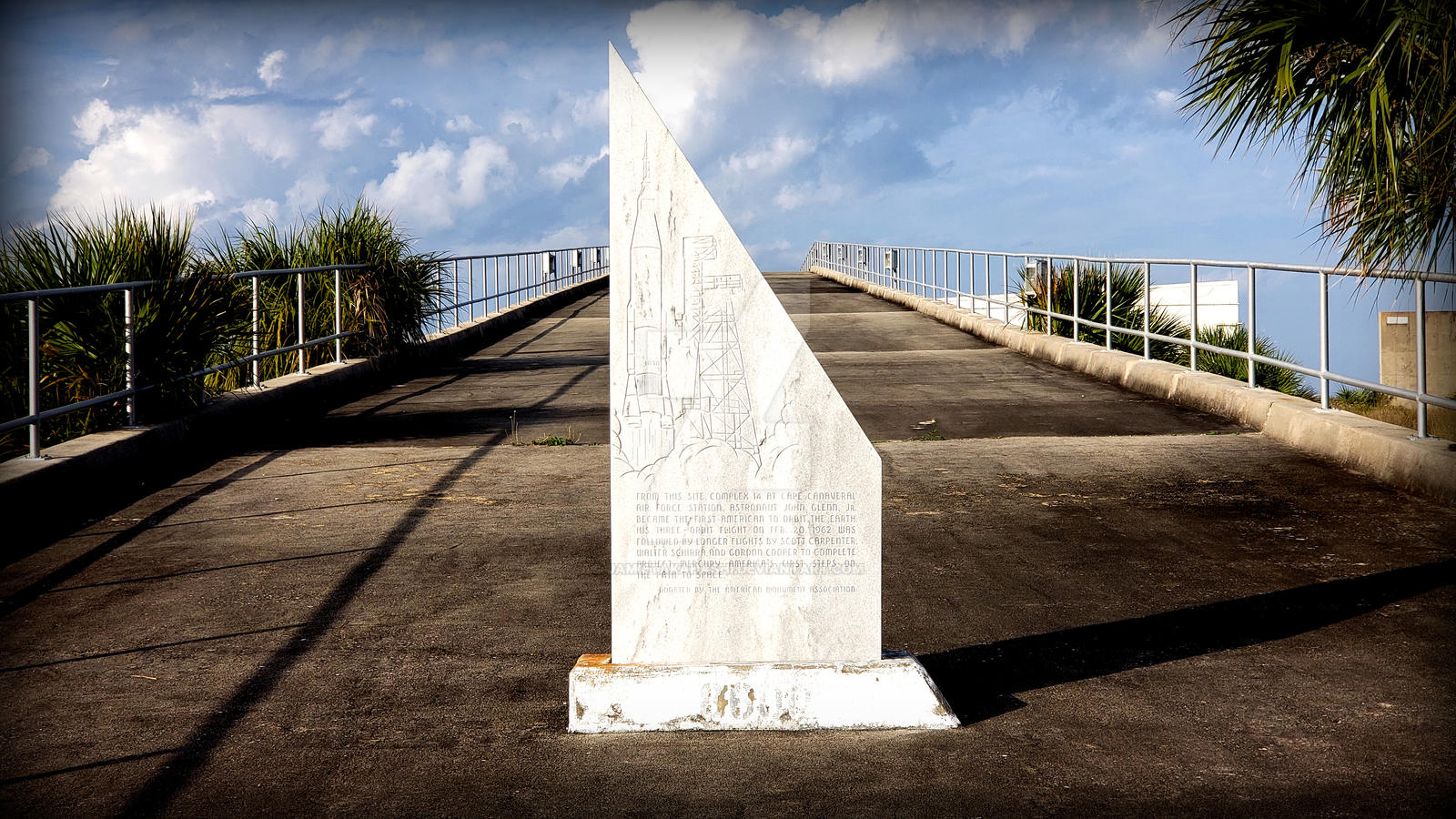
Figure 19: The American Monument Association memorial for the Launch Complex 14 Mercury flights

Normal Me: The memorial reads, “From this site, Complex 14 at Cape Canaveral Air Force Station, astronaut John Glenn, Jr., became the first American to orbit the Earth. His three-orbit flight on Feb. 20, 1962 was followed by longer flights by Scott Carpenter, Walter Schirra, and Gordon Cooper to complete Project Mercury, America’s first steps on the path to space.”
Snarky Me: A nice little memorial, too bad not more people get to see it.
Sports Fan Me: It’s interesting to see all the lights on either side of the ramp on the fencing. I wonder if they light it up on occasion for special events.
Artistic Me: I don’t know, but in lieu of artificial light, I like how the real light plays through the columns supporting the ramp, and the trees really make it look especially Floridian.

Figure 20: The Floridian sun peeks out over the launch pad ramp

Sports Fan Me: I think that might be one of the best shots yet.
Artistic Me: Why thank you.
Sports Fan Me: You’re quite welcome
Snarky Me: Moving on from this session of the mutual admiration society…
Normal Me: Yes, not every side of the pad could be quite so picturesque.

Figure 21: Rust and decay on the pad’s west side

Artistic Me: I don’t know, there’s something kind of beautiful about it, and humbling.
Normal Me: Humbling in the way that all we do as humans is fleeting?
Snarky Me: No, humbling in the way that this thing could fall down on top of us at any point and end the yeeting.
Normal Me: Oh. Well. Yes, there’s a good reason we didn’t go any further into the room with the dangling ceiling vent.
Nerdy Me: Yeah, that was a pretty good call, considering one had already crashed to the floor.
Artistic Me: You mean none of the rooms were explored?
Sports Fan Me: Nobody said that…they were just really boring.
Nerdy Me: No equipment?
Sports Fan Me: Not a lick.
Normal Me: Well, I think we saw some good stuff on the outside, at any rate

Figure 22: Northwest corner and flame diverters; the concrete stubs at ground level held the tracks on which the original service tower traveled

Artistic Me: Grasses to grasses, rust to rust…
Nerdy Me: The years weren’t terribly kind, were they?
LC14 Pad Transition

Figure 23: Then and now, the launch pad and ramp under construction versus its condition today, viewed from the northeast corner. Archival photo courtesy of the 45th Mission Support Group

Sports Fan Me: No, and it’s sad that the tower had to come down. It would have been so cool to see it. Or climb it…

Figure 24: Mercury Atlas 9 on the pad with Gordon Cooper ready for orbit. Image courtesy of NASA via Wikimedia Commons

Artistic Me: That’s spectacular, what a sight…
Nerdy Me: Such an exciting time, too.
Normal Me: Well, things are pretty exciting now as well, just not as novel.
Nerdy Me: True, true. We should be content to be around now and playing a role in the next adventures, right?
Artistic Me: Indeed, though we can still remember and commemorate the past.
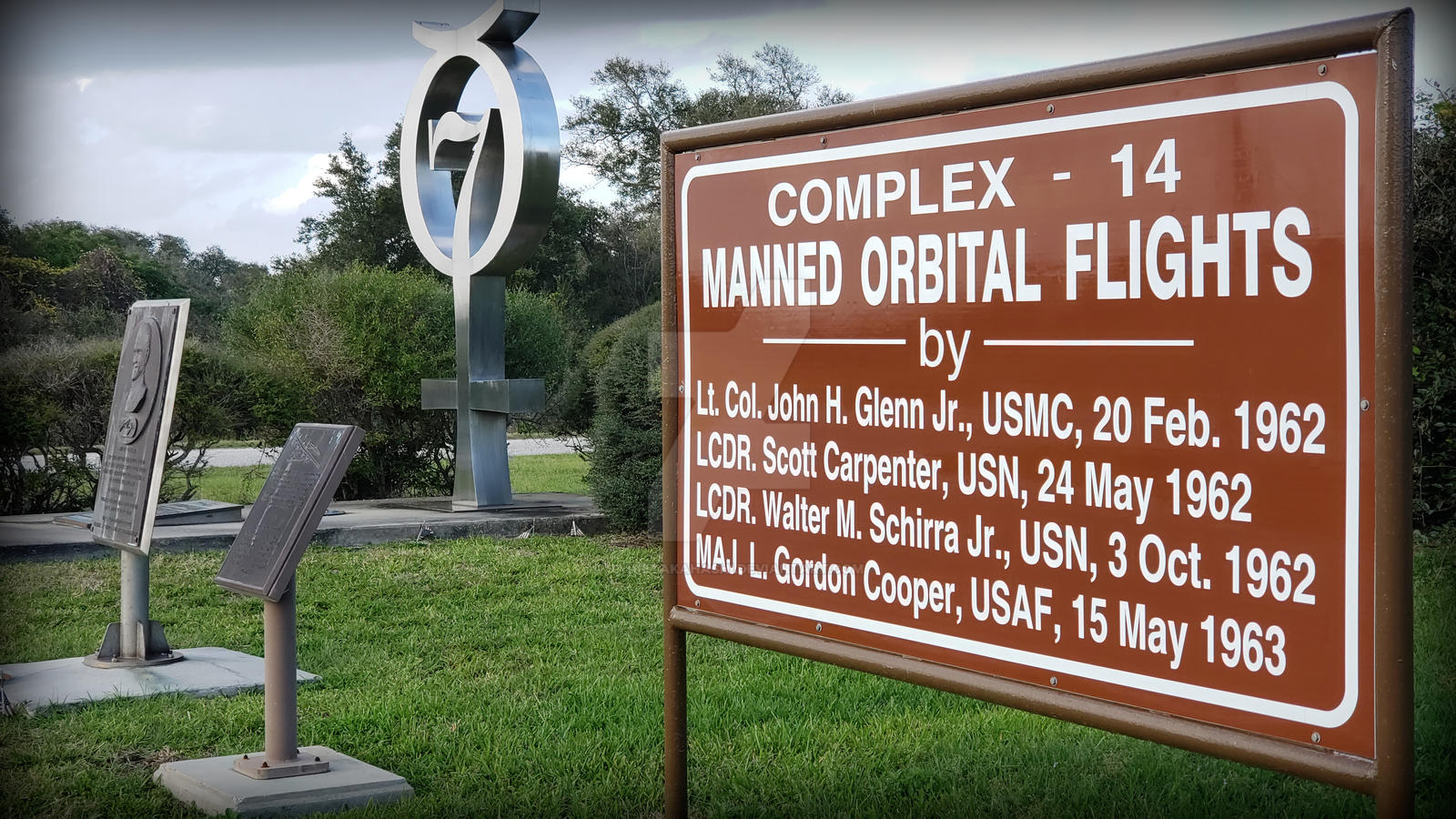
Figure 25: Memorials at the turn into Launch Complex 14

Sports Fan Me: Oh, nifty! These are at the entrance?
Normal Me: Yes, alongside ICBM Road. Obviously the sign has the dates and pilots of the manned Mercury launches from this site, but the plaques commemorate Glenn, Atlas Test Conductor Thomas O’Malley, and the crew of a C-130 which was lost near Nairobe as it flew a mission in support of Project Mercury.
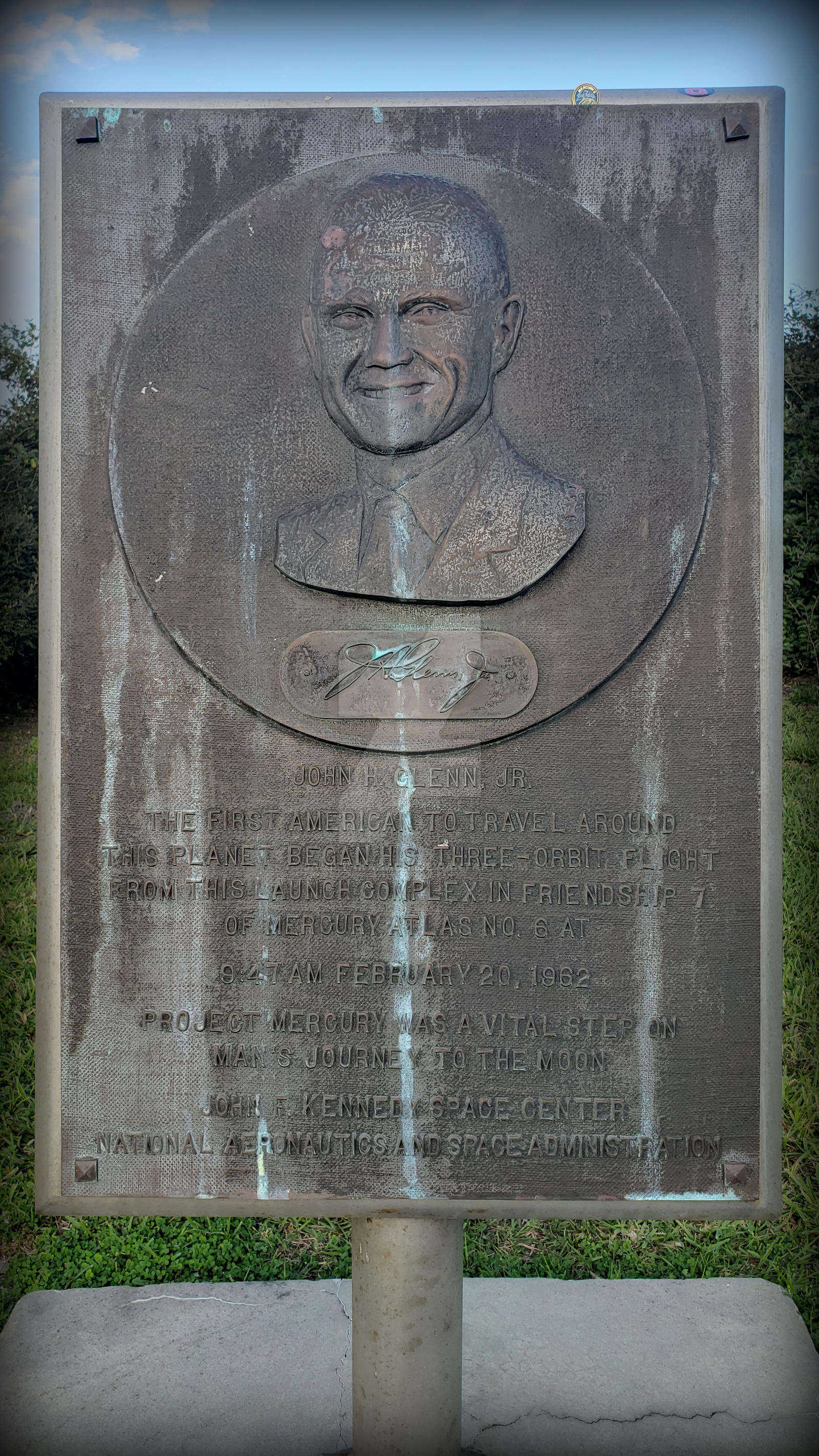
Figure 26: In commemoration of John Glenn’s orbital flight
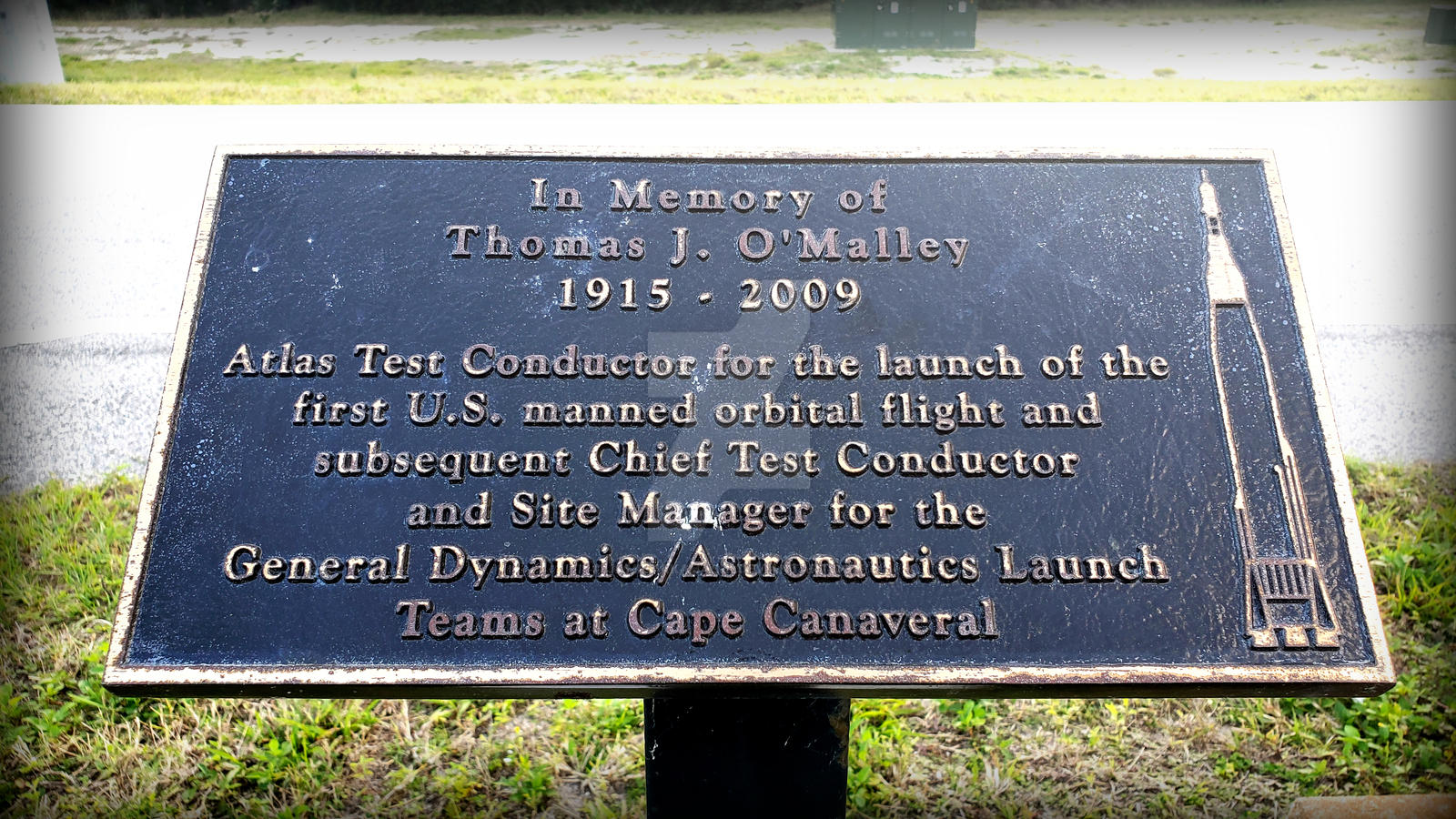

Figure 27: In memory of Atlas Test conductor Thomas O’Malley
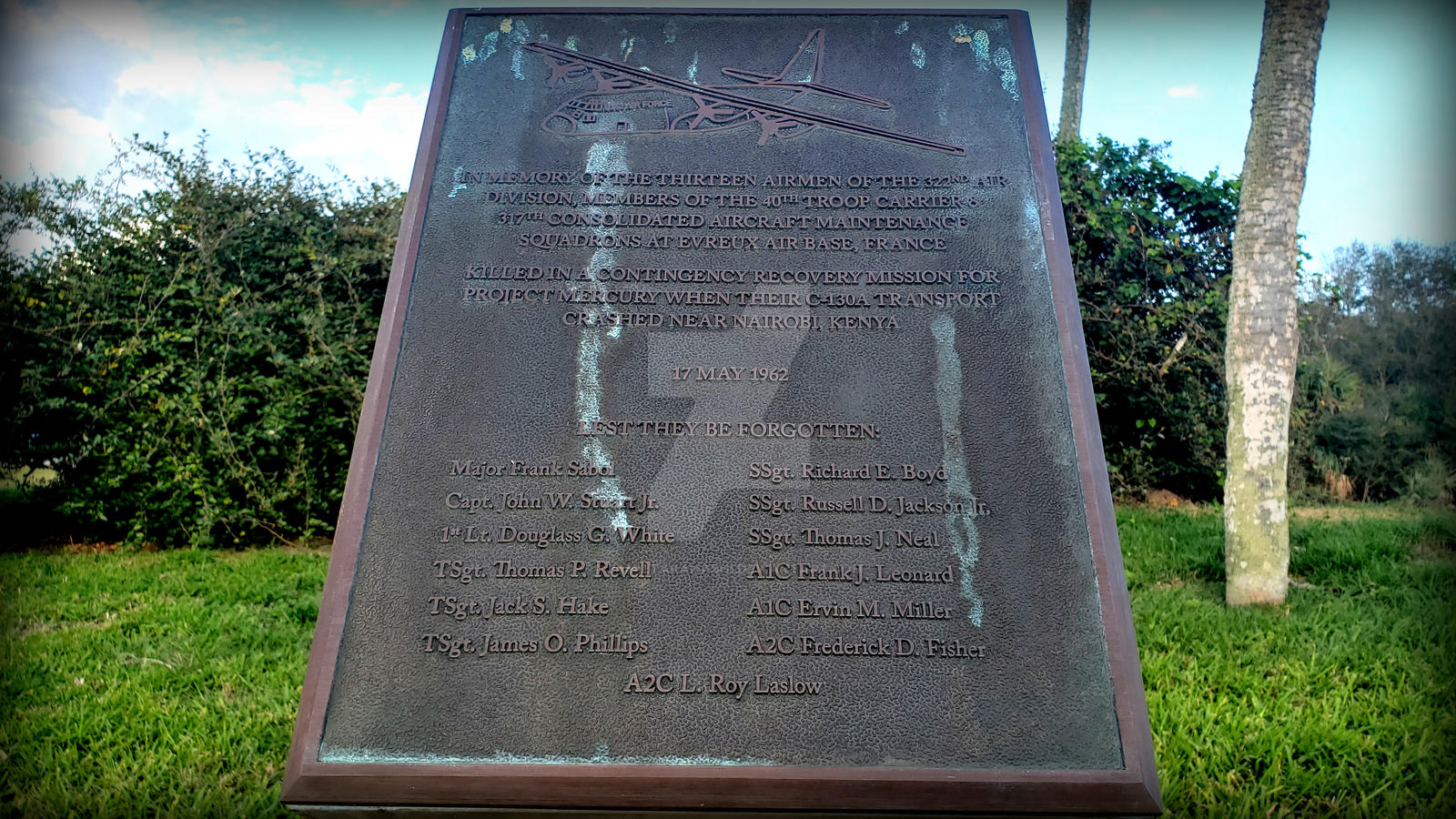

Figure 28: In memory of the C-130 crew lost supporting Project Mercury

Artistic Me: Very nice tributes, though showing some wear.
Nerdy Me: Yeah, I really do wish they’d do more upkeep on this site.
Snarky Me: We’ll see how it looks in 500 years when the time capsule under the statue is opened.
Sports Fan Me: Wait, there’s a time capsule here?
Nerdy Me: Yep, buried in 1964
LC14 Time Capsule Install Small

Figure 29: Burial of the Project Mercury Time Capsule, set to be opened in 2464. Image courtesy of the 45th Mission Support Group

Nerdy Me: That’s what you see at the base of the statue.

Figure 30: The Project Mercury statue, erected as a public service by General Dynamics

Artistic Me: Huh, well that’s neat. And the plaque on the ground says…
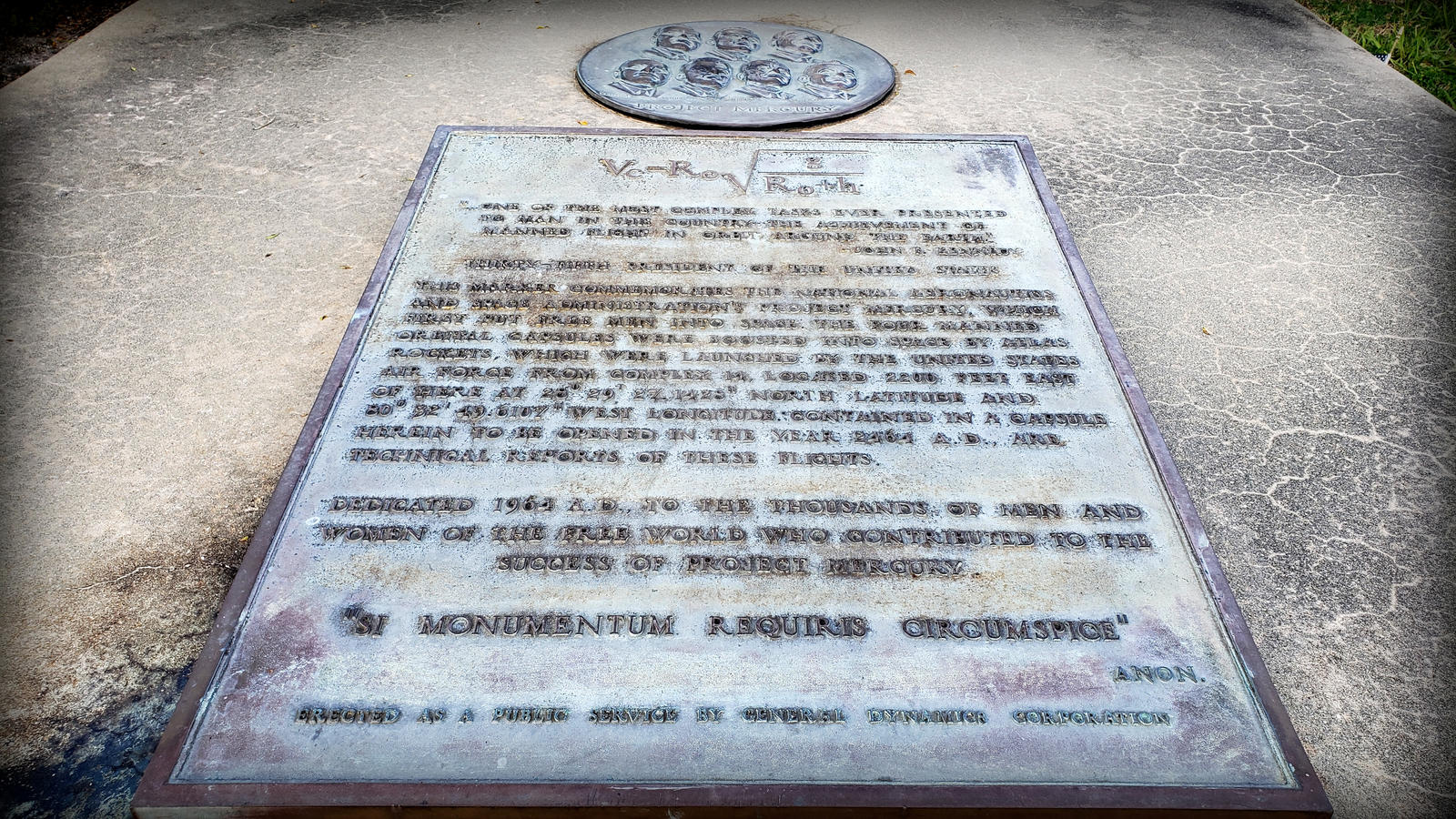
Figure 31: The Project Mercury time capsule marker

Normal Me: “…one of the most complex tasks ever presented to man in this country…the achievement of manned flight in orbit around the Earth. – John F Kennedy, Thirty-fifth President of the United States. This marker commemorates the National Aeronautics and Space Administration’s Project Mercury, which first put free men into space. The four manned orbital capsules were boosted into space by Atlas rockets, which were launched by the United States Air Force from Complex 14, located 2200 feet east of here at 28° 29′ 27.1428” north latitude and 80° 32′ 49.6107 west longitude. Contained in a capsule herein to be opened in the year 2464 A.D. are technical reports of these flights. Dedicated 1964 A.D., to the thousands of men and women of the free world who contributed to the success of Project Mercury. “Si monumentum requiris circumspice” – Anon.
Sports Fan Me: Which means…
Artistic Me: Essentially, if you’re looking for the monument, look around yourself.
Sports Fan Me: Well that’s a nice way to put it.
Artistic Me: What about the equation?
Nerdy Me: Well, it’s a pretty funky way of writing the velocity for a circular orbit, one we’ve not really used much ourselves.
Artistic Me: Makes sense.
Sports Fan Me: So that’s it, eh? Our explorations here are at an end?
Nerdy Me: Yeah, but I doubt it’ll be the last time we’re here.
Normal Me: They did tell us that the Blockhouse is good for promotion ceremonies…
Artistic Me: Hm, that’s something to think about in about two years.
Sports Fan Me: Could be fun! Though not as fun as promoting at a Penguins game.
Normal Me: Well, not much can beat that.
Sports Fan Me: True. At any rate, it’s been real, it’s been fun, and it’s been pretty darn cool.
Nerdy Me: Yep, a worthwhile detour. Perhaps we can petition them to add a plaque for Ms. Johnson.
Normal Me: Perhaps we should.
Snarky Me: Where’s our next detour?
Nerdy Me: Beats me, maybe we’ll find out next week.
Sports Fan Me: Will it involve more yeeting again?
Others in Unison: Sigh…


Normal Me: Break break! What’s new in space?

Nerdy Me: Well, here’s some new space news for you:

Northrop Grumman has successfully docked a satellite with another one! This is a step toward autonomous satellite repair and reprovisioning! https://spacenews.com/northrop-grummans-mev-1-servicer-docks-with-intelsat-satellite/

We might’ve known about this sooner than most, but SpaceX’s CRS-20 mission has been delayed due to second stage valve issues: https://www.space.com/spacex-dragon-crs-20-cargo-ship-launch-delay.html

Astra Space is counting down to its Rocket 3.0 launch on Friday: https://darpalaunchchallenge.org/index.html

Virgin Orbit might launch another payload from LauncherOne within the next week or so once we’re in March: https://www.nextspaceflight.com/launches/details/704

Artistic Me: That’s it for this week’s entry, arrivederci!

Rate this:

Start with the Complex…es

Posted by jamestrexler on February 19, 2020
Posted in: Uncategorized. Leave a comment

Launch Complexes 1-2: Early NACA Steps Into Aerospace Research at Cape Canaveral


Normal Me: So, starting at the very beginning, are we?

Artistic Me: A very good place to start.

Snarky Me: Shut up.

Artistic Me: When you read you begin with…

Nerdy Me: Shut. UP.

Artistic Me: Sorry.

Normal Me: Yes, musical interlude aside, we recently took a side trip after work to go visit the very first launch complexes at Cape Canaveral, appropriately numbered, well, Launch Complexes 1 and 2. It’s hard to separate them all as they’re literally within a few steps of one another, so we’ll try to dig into the historical record and see what we can figure out about them. A lot of the information on the various launch complexes is owed to the research of John Hilliard who contributed immensely to the Air Force Space and Missile Museum and Sands Space History Center. You can learn much more about significant events and dates in the complex’s history here.

Nerdy Me: NASA has a policy of “Abandon in Place” for many of its historic launch sites, captured very visibly on the former Apollo launch site, Launch Complex 34. [1] Nevertheless, we’ll do our best to see what still remains. There’s honestly not much left to see at the sites, unfortunately. Most of the buildings are dilapidated and decaying and few of the facilities give much indication beyond their shape of what they were.

Blockhouse 1-2 Approach

Figure 1: Operations Control Building, Launch Complex 1-2

Normal Me: The shape, of course, refers to the blockhouses, variously known as Operations Control Buildings. They have a fairly characteristic construction to them. Concrete domes were features of early command centers all over the Cape, from Launch Complexes 1-4 up through Complexes 34 and 36. In fact, when we get to Complex 34, we’ll see that it has almost an Enterprise bridge feel to it.

Snarky Me: Plus, having a big concrete dome over your head makes you feel totally safe, especially if the interior of it is lined with asbestos…

Nerdy Me: Uh, yeah, about that… Anyway, these early blockhouses were far more rudimentary than anything today, much less the bridge of any Enterprise. There was the concrete dome, obviously, but also large observation windows looking out onto the pads, in addition to a windowed tower in the case of the blockhouse for launch pads 1 and 2.

Normal Me: Here’s what the building looked like in its heyday, complete with a nice Aerostat off in the distance.

Launch Complex Aerial View

Figure 2: Operations Control Building circa 1950s. Photo courtesy of the Sands Space History Center

Nerdy Me: In comparison, here’s what the tower looks like now…

Blockhouse 1-2 Side

Figure 3: Operations Control Building Tower, Northeast Face

Blockhouse 1-2 Tower Closeup

Figure 4: Operations Control Building Tower, Closeup

Snarky Me: Before anyone asks, no, James’ urban adventuring skills were not up to the task of finding a way up to that glass door or onto the balcony.

Sports Fan Me: Maybe next time.

Nerdy Me: Probably not.

Sports Fan Me: But maybe.

Artistic Me: Look at those dangling ceiling tiles! Think of all the asbestos!

Sports Fan Me: Ehhhh, live a little.

Normal Me: That’s exactly what we’re trying to do…

Artistic Me: At any rate, given the vehicles they were working with, I imagine the tower would have been used for weather and pre-launch observation.

Normal Me: No doubt, there’s no way anyone would be allowed to stay up there during launches; who knows how far the shrapnel would go if something was wrong? Last thing anyone needs between them and vehicle debris is nothing but glass.

Snarky Me: Well, the last thing anyone needs between them and vehicle debris is probably nothing…

Sports Fan Me: Or more explodey things…

Nerdy Me: Yeah, yeah, the point is, the safer vantage point, by far, was from the area below the dome. Because of how uncertain things were, in some blockhouses, observers didn’t actually look directly at the pad. In fact, mirrors were used to reflect the view outside down below the level of the grated openings so the launch crews could view what happened without worrying about sharp pieces of metal or balls of fire crashing in through the windows. [2] That would be bad. Back in the day, it would’ve been full of activity on launch days, much like this scene.

Inside the Blockhouse

Figure 5: Launch-related activity in the blockhouse, circa 1950s. Photo courtesy of the Sands Space History Center

Artistic Me: Talk about retro, magnetic tape and all.

Sports Fan Me: Just wait, it gets better.

Interior Electronics

Figure 6: Abandoned Electronics

Snarky Me: That’s “better”?

Control Room

Figure 7: Control Room

Artistic Me: How is this “better”?

Rat Poison

Figure 8: Debris from years of decay

Nerdy Me: THAT IS NOT “BETTER”.

Normal Me: Holy jeez… do you think there was actually any in there?

Sports Fan Me: Trust me, I wasn’t going to check.

Normal Me: It’s fascinating to see what’s left inside there, though.

Artistic Me: Right, I mean, you can kind of tell from the configuration of that control room just where it was. Even I almost want to go back in there and get a closer look at things, see if those openings are just plain windows with the exterior grates blocking them or if they had the mirrors Nerdy mentioned above.

Nerdy Me: I could be wrong, but based on the fact that the door into there was on ground level, it seems like the openings are high enough to be right behind the grates instead of buried below. It would help if we could open up one of those grates for sure…

Snarky Me: Don’t go letting Sports Fan’s bad habits rub off on you. Besides, now they don’t look at much other than trees.

Look to the Trees

Figure 9: Nature reclaiming the blockhouse

Artistic Me: In spite of that, or maybe even enhanced by it, the building is still a pretty cool sight. It’s like the prow of a ship, but it was a practical design with the windows on either side opening up onto launch pads 1 and 2.

Blockhouse 1-2 Front

Figure 10: Blockhouse shutters

Normal Me: Can you imagine the view they would have had, looking out onto the pads, seeing those early vehicles ready to go off?

Sports Fan Me: Something generally like this, but with more explodey things.

Blockhouse 1-2 Forward Panorama

Figure 11: The view from atop the blockhouse dome

Sports Fan Me: There was just enough urban adventuring left for us to get up to the top of the concrete dome, wary of the possibility of encountering snakes or other Floridian critters. Certainly, there appeared to be burrows for something or other, but no new friends were made that day, for better or worse. Probably better.

Blockhouse 1-2 Stairs

Figure 12: The remains of the blockhouse rooftop approach

Snarky Me: Can’t call those much in the way of “stairs” anymore, can you?

Sports Fan Me: Yeah, they weren’t exactly in a shape worth risking their use, so James carefully scaled the hillside instead; at least that wasn’t liable to collapse on him.

Nerdy Me: Nature really is reclaiming this site along with so many of the other ones.

Basketball Hoop

Figure 13: Basketball hoop in blockhouse parking lot

Artistic Me: Ugh, James let his shadow get in the shot…crap.

Normal Me: Well, we never said he was a professional photographer.

Kitchen

Figure 14: Possible blockhouse kitchenette or break room

Rusting Equipment

Figure 15: Rusting rooftop equipment

Artistic Me: In some ways it’s sad, in other ways it’s movingly beautiful, seeing these small relics of the past enduring in one way or another. The stories they could tell, if only they could speak. Instead, the sun has quite literally set on this site.

Sunset

Figure 16: Sunset at Launch Complex 1-2

Normal Me: This is all well and good, but we haven’t even touched on what was launched from these pads.

Nerdy Me: Ah, right! As it so happens, we have a picture of it right here.

Snark on Pad

Figure 17: SM-62 Snarks on launch pads. Photo courtesy of the Sands Space History Center

Nerdy Me: According to the Air Force Space and Missile Museum website, these two pads were primarily used for launches of the SM-62 Snark and, possibly, the MGM-1 Matador ballistic missiles. [2]

Snark on Platform

Figure 18: SM-62 Snark on launch platform. Photo courtesy of the Sands Space History Center

Nerdy Me: Frankly, I’m much more familiar with the Snark, which has a very interesting history.

Sports Fan Me: Oh? Just what is this history?

Nerdy Me: A good question, for another time.

Snarky Me: Thank you, Maz Kanata… and here I thought I was the expert on snark.

Normal Me: Keep telling yourself that.

Sports Fan Me: It’s not all doom and gloom and decay here, though, right?

Nerdy Me: Not at all. While this complex itself will never see another launch as it is, it does still hold the distinction of being a staging area for helicopters supporting the Projects Mercury and Gemini. [2] Beyond that, though, it’ll have a new neighbor soon. Blue Origin is leasing the nearby Launch Complex 36 and is working on updating it for their own New Glenn launches. [3]

LC36 Construction

Figure 19: Launch Complex 36 construction near Launch Complex 1-2

Artistic Me: Wait. Blue Origin.

Nerdy Me Me: Jeff Bezos.

Artistic Me: Oh no…

Normal Me: Mr. Bezos, please, whatever you do, don’t bulldoze LC1-4. Please. In fact, you’re more than welcome to spend some of your loose change to repair and restore them!

Snarky Me: Yes, I’m sure he’ll hear your plea and get right on it.

Sports Fan Me: Hm, sounds like it’s time to urban adventure my way to the LC36 blockhouse before it’s too late.

Others In Unison: NO!


Normal Me: Break break, that’s all for this adventure. Hopefully you enjoyed seeing the sights as much as we enjoyed exploring them. We’ll do our best to get to as many of the remaining sites as we can, assuming we can get into them, and follow up with some fun facts and stories about the systems that called these sites home.

Nerdy Me: And for some recent space news:

If you’re a reporter in Ohio, here’s a chance to see the Orion capsule: https://www.prnewswire.com/news-releases/nasa-invites-media-to-rescheduled-final-test-of-orion-motor-for-crew-safety-system-301007087.html

Here’s your chance to hop a ride with SpaceX as a tourist: https://www.space.com/spacex-crew-dragon-will-fly-space-tourists.html

China is projected to launch a technology demonstrator satellite on Wednesday, not that we know much about what it is open source: https://nextspaceflight.com/launches/details/2967

Russia will launch another Meridian-M communication satellite, its first launch this year: https://www.wearecentralpa.com/weather/astronomical-highlights-for-the-week-12/

Astra Space will be attempting to launch its Rocket 3.0 into orbit from Alaska, hopefully this week: https://arstechnica.com/science/2020/02/at-astra-space-failure-is-an-option/

Artistic Me: Until next time, ciao!


References

[1] R. Miller, Abandoned in Place: Preserving America’s Space History, Albuquerque, New Mexico: University of New Mexico Press, 2016, p. xi.
[2] Air Force Space & Missile Museum, “Launch Complexes 1-2,” US Air Force, 2019. [Online]. Available: http://afspacemuseum.org/ccafs/CX1-2/. [Accessed 8 February 2020].
[3] I. Atkinson, “Blue Origin continuing work on New Glenn launch complex, support facilities,” NASASpaceflight.com, 11 September 2019. [Online]. Available: https://www.nasaspaceflight.com/2019/09/blue-origin-work-new-glenn-launch-facilities/. [Accessed 11 February 2020].

Rate this:

Let’s Try This Again

Posted by jamestrexler on February 12, 2020
Posted in: Miscellany. Tagged: architecture, exploration, science, space. Leave a comment

Normal Me: Wow, this place still exists?

Sports Fan Me: You know what they say, it’s hard to keep a good blog down.

Snarky Me: Was this ever actually a good blog?

Sports Fan Me: Well…

Nerdy Me: I don’t think many people ever actually knew it existed.

Normal Me: We’re not exactly social media mavens.

Artistic Me: “Influencers”, get it right.

Sports Fan Me: Ugh… I’d never want to be associated with that term.

Snarky Me: Don’t worry, you probably never will be!

Nerdy Me: Huzzah! Oh wait…

Normal Me: So, break break, welcome back to our little corner of the blogosphere! It’s been a long time, but we’re going to try something new. A plan. Shocking, right?

Nerdy Me: Yes, for those of you not in the know, James is now working at Cape Canaveral!

Normal Me: Exciting, we know, he’s pretty stoked as well.

Nerdy Me: This dovetails well with his quest to see every manned spacecraft on display, which we’ll try to document here.

Artistic Me: Not necessarily in chronological order, as that might be “Oh hey, three in one day!” followed by weeks or months of crickets.

Nerdy Me: So instead, we’ll try to do a bit of in-depth commentary on not only the capsule but the mission and other related information.

Snarky Me: However tangential that may be.

Normal Me: So without further ado…

Sports Fan Me: Roll the tape!

Sports Fan Me: This year in A Conversation with Myself…


Snarky Me: Before anyone asks, no, James’ urban adventuring skills were not up to the task of finding a way up to that glass door or onto the balcony.

Sports Fan Me: Maybe next time.

Nerdy Me: Probably not.

Sports Fan Me: But maybe.

Artistic Me: Look at those dangling ceiling tiles! Think of all the asbestos!

Sports Fan Me: Ehhhh, live a little.

Normal Me: That’s exactly what we’re trying to do…


Snarky Me: As implied, its test flights were nothing if not interesting, so there must have been plenty of dark humour associated with any launch observations.

Normal Me: I don’t know, that would probably just be you.

Nerdy Me: Well no, at least one or two of our friends would probably get in on the humour and…well…snark.

Artistic Me: Puns.

Sports Fan Me: COMEDY!

Normal Me: Moving on.


Sports Fan Me: Did anyone bring bolt cutters?

Normal Me: For the last time, there will be no breaking and entering on this blog!

Nerdy Me: Butbutbut SPACE!

Snarky Me: Why do we encourage him?


Normal Me: So Kerbal Space Program 2 is supposed to be coming out this year, right?

Nerdy Me: I am ready for my life to be consumed.


Sports Fan Me: For the last few years, UCF has worn space-themed alternate uniforms on the gridiron with the support of KSC and CCAFS.

Nerdy Me: CCSFS.

Normal Me: Is that change official?

Nerdy Me: I don’t know, life is confusion.


Snarky Me: Oooooh, look at me, I’m playing golf on the moon, not like you peasants!

Sports Fan Me: Admit it, you want to as well.

Nerdy Me: John Linnell would have something to say about that.

Normal Me: John Linnell has a lot of things to say about a lot of things.

Artistic Me: You’re thinking John Flansy-flans.


Normal Me: So stay tuned!

Snarky Me: We’ll try not to bore you too much.

Sports Fan Me: Or confuse you.

Artistic Me: Well, maybe sometimes.

Nerdy Me: SCIENCE!

Rate this:

How America Changed Warfare: Part 2

Posted by jamestrexler on April 9, 2012
Posted in: Miscellany. Tagged: agincourt, america, american civil war, antietam, civil, civil war, european warfare, gettysburg, scale conflict, tactics, war, war changes, weapon. Leave a comment

Nerdy me: Goodness gracious…

Normal me: What is it?

Nerdy me: It took more effort to cut this report down than it did to write it.  Not to mention finding the sources to corroborate what James had to say.

Apathetic me: He knows too much for his own good.

Nerdy me: For once, I may agree with you.  Anyway, here it is.  The report.  In its entirety, this time, mainly because there were some changes made to the first half.  Mostly taking out content, but oh well.  Enjoy, all.

———————————————————–

Introduction

            A study of the history of mankind invariably includes a study of warfare. As man has evolved through the ages, the ways in which large scale conflict is waged also evolved. From biblical battlefields to modern urban combat, the prosecution and tools of war have changed in remarkable ways. Often, these changes are slow, building on innovations through the centuries, such as the progression from tools of rock and wood to implements of bronze and iron.[1] Now and then, however, progress accelerates. From the onset of the American Revolution onward, fighting that started with formal lines of soldiers facing off across an open field became intermixed with partisan tactics.[2] World War I began with frontal assaults throwing themselves against entrenched positions and ended with tanks, machine guns, chemical weapons, and bombs dominating tactical and strategic thinking.[3] Even the recent Iraq War began as a clash of conventional government forces but later devolved into asymmetric urban skirmishing.

As with many lessons, however, the adaptations and techniques gleaned from evolutions in warfare were forgotten by the time the next conflict started, much to the detriment of troops in the field. In spite of the way the character of war changes throughout every conflict, the lasting effect of these changes is either minimal, on a tactical level, or doesn’t last at all. Very few conflicts have an inexorable effect upon the way in which wars are prosecuted for years to come. One such historical turning point is the American Civil War. The Civil War, though beginning in a chivalric, Napoleonic style, evolved into a totally new kind of war, ushering in the tactics and strategy which would be a hallmark in modern warfare for years to come.[4]

European Warfare – Killing, the Polite Way

            If one thing could be said for the European style of warfare, it was highly organized. Men lined up in long walls, weapons at the ready, marching steadily toward one another in a slow, deliberate courtship with death. This way of fighting could trace its origins to the ancient Greek phalanx or Roman legion, and for centuries remained essentially unchanged, due in part to the lack of range and accuracy in early ranged weapons. Even when weapons such as muskets became available, opposing forces were required to close in on one another before their fire could be effective. Case in point, the famous order issued at the Battle of Bunker Hill to “[not] fire until [the Continentals] see the whites of their eyes” was not a test of mettle or a form of intimidation, but an ammunition saving precaution, hoping to make every shot count.

Turning back the clock to King Henry V’s 15th century campaign in, the Battle of Agincourt provides a prime example of the European style of war. Before battle even commenced, heralds (messengers travelling under a flag of truce) would approach the opposing force, issuing a challenge to the leader to enjoin their forces in battle. If rejected, the opposition would not press the issue and attack, though pursuit would continue and further pressure would be applied. Societal codes of honor dictated the terms on which fighting would occur, both sides delaying until the respective commanders both felt they held advantage.[5]

Upon agreeing to the time and location for battle, both sides set their forces as they deemed fit, waiting for one side or another to instigate fighting with actions as simple as taunts. Occasionally, as at Agincourt, taunts could take a more sinister form. Instead of “cocking-a-snook,” a true act of aggression instigated battle.[6] Here, as the French observed their numerically outmatched foe, English archers proceeded to rain down volleys of arrows upon the French lines, inciting them to charge. French reluctance to consider archers a threat allowed the English to fluster their opponent, resulting in an ill-fated charge into a forest of sharpened spikes hidden within the English lines.[7] In this way, Henry V and his “band of brothers” defeated a numerically superior French force in “honorable” combat, though somewhat unorthodox in its execution.

European warfare came to its highest form under the leadership of Napoleon Bonaparte in the early 19th century. His focus on maneuvering armies against one another and intermeshing tactical and operational goals provided the framework from which Clausewitz was able to compile his treatise On War, which would eventually supersede the works of Jomini as the dominant form of strategic thinking.[8] Even in the Napoleonic Wars, however, European soldiers experienced a different form of warfare. As Napoleon’s professional men of arms traversed Russia, they encountered the burned remains of several important cities, including Moscow. Cossacks fleeing from the numerically superior French took to devastating the countryside to keep vital supplies out of enemy hands. Even Clausewitz, as enlightened a thinker as he was, could not reconcile these acts with the rigid Napoleonic dictum placing non-military targets off limits.[9] Within a century, however, no such restrictions would apply, even for Europeans.

The Civil War – Americans, Doing Things Their Own Way

            When the American Civil War began, there was already a distinct difference between American forces and their European counterparts. America had no standing army when the war began, and most participants were initially volunteers. Men on either side lined up to participate in what was believed to be a short-lived conflict, thanks to their patriotic fervor or curiosity.[10] Most of these men were either ill-trained or not trained at all, and when the First Battle of Bull Run began on 21 July, 1861, the results of using an army of volunteers was clearly evident.[11]

In lieu of a full report on the battle, one can summarize many of the day’s events in one word: chaos. The random distribution of uniforms and colors caused some soldiers to fire upon their own men, lines to intermingle, and commanders to struggle to maintain cohesion.[12] The Confederacy nevertheless carried the day, forcing the Union forces to depart in a massively disorganized retreat called the “Great Skedaddle,” mingling with observers fleeing the fighting.[13]

Initially, both Confederate and Union forces formed organized lines facing one another in the field outside Manassas in Napoleonic style, marching toward one another until their weapons came to bear. As Napoleon had done half a century earlier, Union General McDowell focused his effort on complicated maneuvers designed to turn the Confederate flank. As it would turn out, these maneuvers were far too complicated for his untrained soldiers to complete.

Combined casualties approached 4,700.[14] What many generals failed to realize about this battle, however, was that it was a harbinger of what was to come.[15] Between this battle and the Seven Days in mid 1862, generals like the commander of Union forces George McClellan found themselves with devastation on a level heretofore unheard of. McClellan was so shaken by the sheer number of casualties that he sought an improbable goal, a Jominian “decisive victory” which would end the war in one swift attack.[16] This was no longer a Jominian war, however.[17]

Many commanders, from both sides of the war, earned their first taste of combat during the Mexican War in the late 1840s. In that conflict, the sum total of American casualties came out at approximately 16,000 out of a force which numbered 60,000 at most.[18] The Battle of Antietam alone passed that entire war’s casualty mark by 6,000.[19] The casualty counts were unfathomable by most of those alive at the time. Perhaps they should not have been so surprising, however. First and foremost, it is important to consider the weapons of the time. In 1861, the US Army began issuing the Springfield Model 1861 while the Confederacy typically relied on the Pattern 1853 Enfield, both rifled muskets. Rifling did not become common practice for weapons until the 19th century and, as such, military commanders were still unaccustomed to the effects rifled muskets had on a battlefield. Rifled muskets imparted a spin on their projectile, further enhanced new ammunition. This deadly combination saw limited use in the Crimean War, but it wasn’t until the American Civil War that armies took full advantage of them. The spin of the new Minié ball stabilized it in flight, increasing the effective range of muskets from 50 to almost 400 yards. Later in the war, repeating rifles were added to the inventory, allowing soldiers to fire off rounds at rates never before imagined.[20] This in rendered frontal charges foolhardy, especially when an entrenched defender could wipe out an advancing enemy long before they could prepare for engagement, much less enter a melee.[21]

Just as important is the development of artillery. Standard cannon shot and grape shot were complimented by canister shot, explosive shells, and shrapnel.[22] These proved devastating against long lines of men, especially at the Battle of Gettysburg.[23] During Pickett’s charge on 3 July, 1863, 12,500 men advanced on the union lines atop Cemetery Ridge. Between musket and cannon fire, they suffered over 50% casualties. Shot and shell alike ripped through the soldiers with deadly efficiency, and though the gaps they created were swiftly filled, the numbers game was not in the Rebels’ favor.[24] By the end of the war, soldiers on both sides saw the futility of now-outdated frontal assaults, especially over open ground, John Bell Hood excepted, of course.

Hood, a Confederate general, used frontal assaults until the end of the war as a means of “discipline.” Doing so Battle of Franklin in 1864 resulted in the Army of Tennessee being knocked off the map as a major fighting force.[25] Instead, commanders began adopting siege tactics, such as at the use of trench warfare during the Richmond-Petersburg Campaign from mid-1864 to early 1865. Instead of sending waves of troops against the defenses of Petersburg, soldiers dug trenches around the city, using them to move closer and closer until they could attack the defenses in relative safety. The Army of the Potomac used their massive siege guns to pound the city’s walls, and miners tunneled under them to set explosive charges. Technology now dominated siege warfare, not just the ravages of time and starvation.[26]

Technology’s effect on the war was not limited to the battlefield, though. Millions of men fought on both sides, requiring mobilization on a scale heretofore unseen in the Americas. Half a century earlier, during the Napoleonic Wars, almost half a million men were forced to march on foot through the desolate wastes of a Russian winter. This Grande Armée suffered over 80% losses during its campaign. Though at no point were half a million men marching in the same group at the same time on either side during the Civil War, hundreds of thousands did have to make their way from one theatre of action to another. Thanks to railroads, this was made more than possible. The transcontinental railroad was still another four years off by the end of the war, but many lines made their way up and down the east coast and into the Midwest, allowing for the deployment of large contingents of men to points all around the country.[27]

Another technological innovation which permitted greater communication over the expansive theatres of the Civil War was the telegraph. For the first time, political and military leaders could exercise their will over remarkable distances almost instantaneously. The telegraph revolutionized command and control for years to come. Though not fully available at the start of the war, by 1862, President Lincoln used telegraphs to send messages to commanders in the field. These commanders returned reports directly to their commander-in-chief in the aftermath of a battle. The rapid exchange of thoughts and orders allowed political leaders to import a greater sense of urgency upon their generals than would have been possible using couriers.[28]

The final consideration on what made the American Civil War the first truly “modern” war involves the involvement of the home front. First and foremost, this war was truly brought to life for civilians on either side through the media. Use of telegraphs permitted stories and battle reports to be relayed to local newspapers faster than had ever been done before in America. Additionally, the photographs of individuals such as Matthew Brady allowed men and women to see the carnage of the battlefields while still miles away, safe in their homes. Unfortunately, and this next point almost distinguishes the Civil War as a “total” war, not all civilians were, in fact, safe in their homes. The battles occurred in the yards of family homesteads, sieges destroyed homes, offices, and industrial centers almost indiscriminately, and private property, especially that which could aid the enemy war effort, was often destroyed or confiscated without hesitation.

Confederate citizens felt the wrath of the Union war effort as their cities were pounded mercilessly. Vicksburg fell on the Fourth of July, 1863, and its citizens would not celebrate the day again for another century. Atlanta’s fall and subsequent burning at the hands of fleeing Confederates was reminiscent of the Cossacks path of strategic destruction in their retreat from Napoleon. Richmond, the very seat of Confederate government, was captured and burned to the ground. Even outside of the major cities, men and women were subject to the ravages of the war. During First Bull Run, Judith Carter Henry, an elderly widow died from wounds sustained after her home was targeted by Union artillery.[29] Wilmer McLean, a fellow resident of Manassas Junction, left his home after the battle to escape the carnage, only to have his new home used four years later as the site of the surrender of General Robert E. Lee to Union commanders.

All told, the cost of the war reached approximately $7 billion. Almost a quarter of this amount was attributed to property damage in the South.[30] Destruction on this scale, including the wholesale razing of cities, would not be seen again for half a century, and then it would take the whole world to surpass it. Never before had so much devastation been visited upon civilians, but from the end of the Civil War on, it would remain a threat for all countries which went to war.

Now, much of the damage done to private property was for the sake of the war effort, destroying or confiscating anything that had potential to be used as war materiel. Only some of it was psychological and, in contrast to a true total war, civilians themselves were not the direct target. In a real total war, there would be little to no concern about civilian deaths. In fact, they could be targeted directly in order to destroy morale on the home front. During his famous 1864 March to the Sea, General Sherman destroyed Confederate cities, farms, and homes. He did not, however, intentionally seek the death of civilians. In this way, even his campaign did not fit the strictest definition of a total war, but the introduction of private property into the realm of legitimate targets brought an end to the chivalric tendency to avoid such attacks.[31] The Civil War was no longer a European style chivalric conflict. This was the first modern war.

Why the Civil War More Than Any Other

            Some sources argue that the first real modern war was the Crimean War in the 1850s. Proponents of this theory note that rifled weapons, trenches, and telegraphs were first used to any noticeable effect during this war. Tactical and technological advances such as these and others were present, yes.[32] However, the full scope of advances and changes in approach had a far broader and more transformative effect on the Civil War and future conflicts than any other war. Consider the First World War. Up until 1917, it was fought almost exclusively by Europeans. Frontal charges made by thousands of men against strongly defended positions were common, resulting in devastating losses. Clearly the lessons learned from the Crimean War, specifically those about trench tactics and the effect of new, more advanced weapons had gone unheeded. Seemingly the only thing that had changed in the prosecution of war was the addition of civilian centers to lists of targets, as seen in the German bombing of London, the widespread destruction in cities such as Vaux or Leuven that resulted from Germany’s Schrecklichkeit, or “terror,” policy, and the genocidal atrocities committed by Russia and the Ottoman Empire.[33] [34] [35] [36]

Outdated tactics continued to rule the battlefield until American “doughboys” arrived in the spring of 1917. American soldiers and their commanders understood what would win this war. Though the troops were all new, the lessons of the Civil War remained. No longer was Napoleonic maneuvering the ticket to victory. A war of attrition, won by superior numbers and weapons, was the game. Four million Americans served in the First World War, with 110,000 dying in the line of duty. Though only 15% the number killed in the Civil War, factoring in the duration of American involvement in the First World War and the fact that they only fought on one side makes this number almost exactly proportional to the Civil War. Attrition, technology, and mobility won the war in a similar way as they had for the Union a half a century earlier. [37]

Conclusion

            The American Civil War was a proving ground for old and new styles of warfare alike. The first years of the war showed the inadequacies of European and Napoleonic styles of warfare when faced with the technological advances of the time. Tactics and strategy evolved to adapt to the new character of war, utilizing new weapons, new forms of communication and conveyance, and opening the floodgates to total war, for the first time bringing private property and civilian populations under fire intentionally, with the purpose of breaking a people’s will.

Chivalry in war required that both sides stood a relatively equal chance of winning. Fairness and propriety were necessary for both sides to retain their honor, the only advantages coming from the superior wit of commanders or the stronger will of soldiers. The Civil War changed that. Asymmetric warfare became the norm, with technology, training, and numbers deciding victory. New technologies facilitated the movement and control of larger armies over greater distances. Including civilians and especially their property as potential targets brought a new dimension to psychological warfare and made public opinion as much a factor in determining strategy and policy as any political or military concerns. The Civil War was a watershed event in the history of armed conflict, and the transformative lessons learned through its four bloody years left an indelible mark on warfare and mankind as a whole.


[1] R. Ernest Dupuy, and Trevor Dupuy, The Harper Encyclopedia of Military History, (New York, NY: Harper Collins Publishers, 1993), 1.

[2] Dupuy, The Harper Encyclopedia of Military History, 782

[3] Dupuy, The Harper Encyclopedia of Military History, 1003

[4] Donald Stoker, The Grand Design – Strategy and the U.S. Civil War (New York, NY: Oxford University Press, 2010), 416.

[5] John Keegan, The Face of Battle – A Study of Agincourt, Waterloo, & The Somme (New York, NY: Random House Inc., 1976), 82.

[6] Keegan, The Face of Battle, 94.

[7] Dupuy, The Harper Encyclopedia of Military History, 449

[8] John Keegan, A History of Warfare (London, Great Britain: Hutchinson, 1993), 221.

[9] Keegan, A History of Warfare, 6-9.

[10] James McPherson, Battle Cry of Freedom, (New York, NY: Oxford University Press, 1988), 308-21.

[11] Stoker, The Grand Design, 42.

[12] McPherson, Battle Cry of Freedom, 342.

[13] McPherson, Battle Cry of Freedom, 348.

[14] Dupuy, The Harper Encyclopedia of Military History, 953

[15] McPherson, Battle Cry of Freedom, 348.

[16] Fitz John Porter, “The Battle of Malvern Hill,” Battles and Leaders of the Civil War, ed. Robert Underwood Johnson and Clarence Clough Buel (New York, NY: The Century Co., 1888), 427.

[17] Stoker, The Grand Design, 65.

[18] K. Jack Bauer, The Mexican War – 1846-1848, (New York, NY: Macmillan, 1674), 397.

[19] McPherson, Battle Cry of Freedom, 544.

[20] Russ A. Pritchard Jr. Civil War Weapons and Equipment, (Guilford, CT: Salamander Books, Ltd., 2003), 8-10.

[21] Fairfax Downey, The Guns at Gettysburg, (New York, NY: David McKay Company, Inc., 1958), 31-2.

[22] Downey, The Guns at Gettysburg, 178-81.

[23] Downey, The Guns at Gettysburg, 3-7.

[24] Earl J. Hess, Pickett’s Charge – The Last Attack at Gettysburg, (Chapel Hill, NC: University of North Carolina Press, 2001), 352-64.

[25] W.J. Wood, Civil War Generalship, (Westport, CT: Praeger Publishers, 1997), 228-30.

[26] A. Wilson Greene, The Final Battles of the Petersburg Campaign, (Knoxville, TN: University of Tennessee Press, 2008), chap. 11.

[27] John E. Clark Jr. Railroads in the Civil War, (Baton Rouge, LA: Louisiana State University Press, 2001), 2.

[28] Tom Wheeler, “How the Telegraph Helped Lincoln Win the Civil War,” George Mason University’s History News Network (blog), November 19, 2006, http://hnn.us/articles/30860.html.

[29] Ted Ballard, Battle of First Bull Run, (Washington, D.C: Center of Military History, U.S. Army, 2004), 24.

[30] David Goldfield, America Aflame, (New York, NY: Bloomsbury Press, 2011), 305.

[31] David Nevin, Sherman’s March, (Alexandria, VA: Time-Life Books, 1986), chap. 2.

[32] Andrew Lambert, and Stephen Badsey, The Crimean War, (Dover, NH: Alan Sutton Publishing Inc., 1994), 11.

[33] John H. Morrow Jr. “The War in the Air,” World War I – A History, ed. Hew Strachan (Oxford, NY: Oxford University Press, 1998), 265-7.

[34] David Trask, “The Entry of the USA Into the War and its Effects,” World War I – A History, ed. Hew Strachan (Oxford, NY: Oxford University Press, 1998), 239.

[35] Lawrence Sandhaus, World War I – The Global Revolution, (Cambridge, England: Cambridge University Press, 2011), 389-91.

[36] John Keegan, The First World War, (New York, NY: Alfred A Knopf, Inc., 1999), 81-4.

[37] Trask, World War I – A History, 251-2.

———————————————————–

Sports Fanatic me: Write a book.  Even I might read it.

Normal me: The last book you had James read was about the history of the Pirates.

Sports Fanatic me: So?  I can appreciate the Civil War.  We wouldn’t have baseball without it.  Speaking of which, the Pirates are looking mighty good right now.

Apathetic me: Yeah, three games into the season.

Normal me: It’s a start, at least.

Artistic me: Hey guys, did I miss anything?

Normal me: Whoa, where did you come from?

Artistic me: Binging on Starbucks and soda.

Nerdy me: Was it a trying Lent for you?

Artistic me: You have no idea.

Rate this:

How America Changed Warfare: Part 1

Posted by jamestrexler on March 30, 2012
Posted in: Miscellany. Tagged: agincourt, america, american civil war, antietam, civil, civil war, european warfare, gettysburg, scale conflict, tactics, war, war changes, weapon. Leave a comment

Nerdy me: Good evening, folks.  So, for those who don’t know (which is most of you), James is working on a report on how the American Civil War can be considered the first “modern” war.  He’s going to put up what he has so far for anyone who wants to see, critique, comment, or make suggestions.  The first five pages deal with everything from a brief history of conventions of European warfare to how the Civil War seemed to be a different kind of war and the effect of weapons upon the prosecution of battle.  So, without further ado:

———————————————————–

Introduction

            A study of the history of mankind invariably includes a study of warfare.  As man has evolved through the millennia, the ways in which large scale conflict is waged has also evolved.  From ancient biblical battlefields to modern urban combat, the prosecution and tools of war have changed in remarkable ways.  Often, these changes are slow, building upon innovations throughout the centuries, such as the progression from tools of rock and wood to implements of bronze and iron.[1]  Now and then, however, progress accelerates.  From the onset of the American Revolution onward, fighting that started with formal lines of soldiers facing off across an open field became intermixed with partisan tactics.[2]  World War I began with frontal assaults throwing themselves against entrenched positions and ended with tanks, machine guns, chemical weapons, and bombs dominating tactical and strategic thinking.[3]  Even the recent Iraq War began as a clash of conventional government forces but later devolved into asymmetric urban skirmishing.

As with many lessons, however, the adaptations and techniques gleaned from evolutions in warfare were forgotten by the time the next conflict started, much to the detriment of troops in the field.  In spite of the way the character of war changes throughout every conflict, the lasting effect of these changes is either minimal, on a tactical level, or doesn’t last at all.  Very few conflicts have an inexorable effect upon the way in which wars are prosecuted for years to come.  One such historical turning point is the American Civil War.  The Civil War, though beginning in a chivalric, Napoleonic style, evolved into a totally new kind of war, ushering in the tactics and strategy which would be a hallmark in modern warfare for years to come.[4]

European Warfare – Killing, the Polite Way

            If one thing could be said for the European style of warfare, it was highly organized.  Men lined up in long walls, weapons at the ready, marching steadily toward one another in a slow, deliberate courtship with death.  This way of fighting could trace its origins to the ancient Greek phalanx or Roman legion, and for centuries remained essentially unchanged, due in part to the lack of range and accuracy in early ranged weapons.  Even when weapons such as muskets became available, opposing forces were required to close in on one another before their fire could be effective.  Case in point, the famous order issued at the Battle of Bunker Hill to “[not] fire until [the Continentals] see the whites of their eyes” was not a test of mettle or a form of intimidation, but an ammunition saving precaution, hoping to make every shot count.

Turning back the clock to the early 15th century and the time of King Henry V’s campaign in France, the Battle of Agincourt provides a prime example of the European style of warfare, the relatively simple weapons involved notwithstanding.  Before battle could even commence, heralds (essentially messengers travelling under a flag of truce) would approach the opposing force, issuing a challenge to the leader to enjoin their forces in battle.  If rejected, the opposition would not press the issue and attack, though pursuit would continue and further pressure would be applied.  Societal codes of honour dictated the terms on which fighting would occur, with both sides delaying until the respective commanders reached a point where they both felt they held advantage.[5]

Upon agreeing to the time and location for battle, both sides were allowed to set their forces as they deemed fit, waiting for one side or another to instigate fighting with actions as simple as taunts.  Occasionally, as was the case at Agincourt, taunts could take a more sinister form where, instead of “cocking-a-snook,” a true act of aggression instigated battle.[6]  Here, as the French observed their numerically outmatched foe, English archers proceeded to rain down volleys of arrows upon the French lines, inciting them to charge.  French reluctance to consider archers a threat allowed the English to fluster their opponent, resulting in an ill-fated charge into a forest of sharpened spikes hidden within the English lines.[7]  In this way, Henry V and his “band of brothers” defeated a numerically superior French force in “honourable” combat, though somewhat unorthodox in its execution.

Post-battle conduct was also characteristic of the attitudes toward honour and chivalry which were prevalent in the time.  After the first French charge, the English took prisoners.  When dining, Henry V himself invited French noblemen to join him, treating them as equals in spite of their status as enemy combatants.  Not all prisoners were treated so generously, however.  French prisoners held behind English lines were executed and casualties housed in cottages were incinerated.  This controversial decision was a pragmatic one, however, to prevent the prisoners from re-arming themselves and attacking the English from the rear.  The more common practice would be to “parole” soldiers, releasing them under their word of honour that they would not take up arms again.[8]  Sometimes, however, the vagaries of war precluded such conduct, and this would remain the case four centuries later, though generally sans-atrocity.

European warfare came to its highest form under the leadership of Napoleon Bonaparte in the early 19th century.  His focus on manoeuvring mass armies against one another and the intermeshing of tactical and operational goals provided the framework from which Clausewitz was able to compile his treatise On War, which would eventually supersede the works of Jomini as the dominant form of strategic thinking.[9]  Even during the Napoleonic Wars, however, European soldiers were presented with an alternative form of warfare.  As Napoleon’s force of professional men of arms made their way through Russia, they encountered the burned remains of several important cities, including the old capital of Moscow.  Cossacks fleeing from the numerically superior force adopted an approach resembling “total war,” devastating the countryside and keeping vital supplies out of the hands of their enemy.  Even Clausewitz, as enlightened a thinker as he was, could not reconcile these acts with the rigid Napoleonic dictum placing non-military targets off limits.[10]  Within a century, however, no such restrictions would apply, even for Europeans.

The Civil War – Americans, Doing Things Their Own Way

            When the American Civil War began, there was already a distinct difference between Union and Confederate forces and their European counterparts.  America had no standing army at the time the war began, and the majority of participants were initially volunteers.  Men on either side of the conflict lined up to participate in what was believed to be a short-lived conflict, thanks to their patriotic fervour or curiosity.[11]  Most of these men were either ill-trained or not trained at all, and when the First Battle of Bull Run began on 21 July, the results of using an army of volunteers showed.[12]

In lieu of a full report on the battle, one can summarize many of the day’s events in one word: chaos.  The random distribution of uniforms and inconsistent colours caused some individuals to fire upon their own men, lines to intermingle, and commanders to struggle to maintain cohesion.[13]  The Confederacy nevertheless carried the day and forced the Union forces to depart in a massively disorganized retreat called the “Great Skedaddle,” mingling with casual observers fleeing the fighting.[14]

Initially, both the Confederate and Union forces formed up in organized lines facing one another in the field outside Manassas Junction in Napoleonic style, marching toward one another until their weapons came to bear.  As Napoleon had done half a century earlier, Union General McDowell focused much of his effort on complicated manoeuvres designed to turn the Confederate flank.  As it would turn out, these manoeuvres were far too complicated for his untrained soldiers to complete.

Combined casualties on either side approached 4,700.[15]  What many generals failed to realize about this battle, however, was that it served as a harbinger of what was to come.[16]  Between this battle and the Seven Days in mid 1862, generals such as the commander of Union forces George McClellan found themselves with devastation on a scale heretofore unheard of.  McClellan was so shaken by the sheer number of men killed or wounded on either side that he sought an improbable goal, a Jominian “decisive victory” which would end the war in one swift attack.[17]  This was no longer a Jominian war, however.[18]

Many commanders, from both sides of the war, earned their first taste of combat during the Mexican War in the late 1840s.  In that conflict, the sum total of American casualties came out at approximately 16,000 out of a force which numbered at most 60,000.[19]  The Battle of Antietam alone passed that entire war’s casualty mark by 6,000.[20]  The casualty counts were unfathomable by most of those alive at the time.  Perhaps they should not have been so surprising, however.  First and foremost, it is important to consider the weapons of the time.  In 1861, the US Army began issuing the Springfield Model 1861 while the Confederacy typically relied on the Pattern 1853 Enfield, both rifled muskets.  Rifling did not become common practice for weapons until the 19th century, and as such, military commanders were still unaccustomed to the effects rifled muskets had on a battlefield.  Rifled muskets imparted a spin on their projectile, and this was further enhanced by the characteristics of the Minié ball.  This deadly combination saw limited use in the Crimean War, but it wasn’t until the American Civil War that armies took full advantage of them.  The spin of the Minié ball stabilized it in flight, increasing the effective range of muskets from 50 to almost 400 yards.  This in and of itself rendered frontal charges foolhardy, especially when an entrenched defender could wipe out an advancing enemy long before they could prepare for engagement, much less enter a melee.

Just as important is the development of artillery.  Standard cannon shot and grape shot were complimented by canister shot, explosive shells, and shrapnel.  These proved particularly devastating against long lines of men, especially at the Battle of Gettysburg.  During Pickett’s charge on 3 July, 12,500 men advanced on the union lines atop Cemetery Ridge.  Between musket and cannon fire, they suffered over 50% casualties.  Shot and shell alike ripped through the soldiers with deadly efficiency, and though the gaps they created were swiftly filled, the numbers game was not in the Rebels’ favour.  By the end of the war, soldiers on both sides saw the futility of now-outdated frontal assaults, especially over open ground, John Bell Hood excepted, of course.


[1] R. Ernest Dupuy, and Trevor Dupuy, The Harper Encyclopedia of Military History, (New York, NY: Harper Collins Publishers, 1993), 1.

[2] Dupuy, The Harper Encyclopedia of Military History, 782

[3] Dupuy, The Harper Encyclopedia of Military History, 1003

[4] Donald Stoker, The Grand Design – Strategy and the U.S. Civil War (New York, NY: Oxford University Press, 2010), 416.

[5] John Keegan, The Face of Battle – A Study of Agincourt, Waterloo, & The Somme (New York, NY: Random House Inc., 1976), 82.

[6] Keegan, The Face of Battle, 94.

[7] Dupuy, The Harper Encyclopedia of Military History, 449

[8] Keegan, The Face of Battle, 86.

[9] John Keegan, A History of Warfare (London, Great Britain: Hutchinson, 1993), 221.

[10] Keegan, A History of Warfare, 6-9.

[11] James McPherson, Battle Cry of Freedom, (New York, NY: Oxford University Press, 1988), 308-321.

[12] Stoker, The Grand Design, 42.

[13] McPherson, Battle Cry of Freedom, 342.

[14] McPherson, Battle Cry of Freedom, 348.

[15] Dupuy, The Harper Encyclopedia of Military History, 953

[16] McPherson, Battle Cry of Freedom, 348.

[17] Fitz John Porter, “The Battle of Malvern Hill,” Battles and Leaders of the Civil War, ed. Robert Underwood Johnson and Clarence Clough Buel (New York, NY: The Century Co., 1888), 427.

[18] Stoker, The Grand Design, 65.

[19] K. Jack Bauer, The Mexican War – 1846-1848, (New York, NY: Macmillan, 1674), 397.

[20] McPherson, Battle Cry of Freedom, 544.

———————————————————–

Nerdy me: That’s all for now.  As usual, James writes the report and then finds people to prove him right.  Trust me, it works.  Anyway, feel free to proofread or comment (I do hope you shall).  Part two shall come forthwith…when it gets written.  Only thing to be sure of, it’ll be done by Thursday.  Well, it’d better be done by Thursday…

Rate this:

JAS 39 Gripen… that’s griffon for you non-swedes.

Posted by jamestrexler on March 28, 2012
Posted in: Model Aircraft. Tagged: airplane, gripen, jas-39, model, model airplane, model kit, saab. Leave a comment

Artistic me: Ah, the Swedes…

Sports Fanatic me: I just love their fish.

Nerdy me: They’re not actually…

Artistic me: Shhhh.  Just let him be.

———————————————————–

Normal me: Been a while, hasn’t it?

Apathetic me: Wonder if anyone’s noticed.

Nerdy me: I noticed.

Normal me: Of course you did, you’re the one who does most of the work that makes it here in the first place.

Artistic me: Hey now, what about me?

Normal me: Er, sorry, you too.

Artistic me: Hmph.

Apathetic me: Can we get to the point now?

Normal me: Oh, of course, Mr. Impatient.  Anyway, we’re here to discuss yet another of James’ many model aircraft.  This time, it’s Sweden’s light-weight superfighter, the JAS 39 Gripen.

Artistic me: It’s a pretty little plane, small, delta winged with canards.

Nerdy me: Only one engine, but it’s quick due to its weight, and it has one of the smallest frontal aspect ratios of any modern aircraft, making it difficult to see heads-on.  Advantageous in a dogfight.

Normal me: This particular kit came from the Italeri company.  James had already sampled their work in the F-22A he had built three years ago, and he has a fairly high regard for the company.  Once again, here’s a step by step, photo by photo representation of the work involved.  Take it away, Nerdy and Artistic.

———————————————————–

Nerdy me: Step one involved building the cockpit and placing it in its proper location in the fuselage.  Essentially a standard procedure.  I’ll note, though, that the ejection handle – always a nice touch – is still a pain to paint due to its size.  Making up for it is the quality of the decals.  Nice ones, though the surface details are lacking.

Step 1 - Cockpit Assembly

Step 1 - Cockpit Assembly

Artistic me: Step two closed up the fuselage.  Normal stuff, that, and not too difficult this time.  The cockpit lined up relatively well and didn’t require significant nudging.  Step three was the construction of the wings (basically just sticking the two top pieces on the one bottom one) and that was affixed to the fuselage in step four.  Simple.

Step 2 - Fuselage Assembly

Step 2 - Fuselage Assembly

Step 3 - Wing Assembly

Step 3 - Wing Assembly

Step 4 - Wing-Fuselage Mating

Step 4 - Wing-Fuselage Mating

Nerdy me: Now things start getting interesting again.  You’ll notice in the next shot, the canards have been added, and there are now air brakes on the aft fuselage.

Step 5 - Canards, Air Brakes, etc.

Step 5 - Canards, Air Brakes, etc.

Artistic me: And now things get less fun.  Why? Because of white, that’s why.  White paint is atrocious.  Not as atrocious as silver, but it comes close.  It takes far too many coats to cover well, and even more with gloss.  Anyway, the landing gear and whatnot are going into place.

Step 6 - Landing Gear

Step 6 - Landing Gear

Nerdy me: Now things have really come together.  The gear doors are added, the canopy included, and other miscellaneous details such as antennae added.  She’s nearing completion, and even has a preliminary paint job.  You’ll note the yellow on the wing root – that’s a decal.  James decided to put that one at least because that surface was fully painted and it gave a bit of a reference as to how it’ll look when completed.

Step 7 - Doors and Canopy

Step 7 - Doors and Canopy

Artistic me: As much as i hate to say it, the weapons add even more to this aircraft, in a way.  At least to the realism.  Goodness knows this has plenty of them.

Step 8 - Weapons

Step 8 - Weapons

Nerdy me: Now it’s time to put her on display.  So here we go.

Beauty Shots

Beauty Shots


———————————————————–

Nerdy me: Well?

Normal me: She looks very nice indeed, I’m glad James decided to pick that kit up.

Sports Fanatic me: Yeah, I really want to fly that bird.

Apathetic me: Join the Swedish Air Force.

Sports Fanatic me: Will they give me their fish?

Apathetic me: Ugh…

Normal me: So, isn’t James thinking about using his new gloss-coat lacquer on it?

Artistic me: He is.  He saw someone else’s kit, and they’d done that and it looks even better with it.

Normal me: How much work would it take to do that?

Artistic me: Not much, it’d just be a matter of taking it down and carefully brushing into the nooks and crannies on the underside.  We’ll see, I suppose.

Normal me: Sounds like a plan.  Well, that’s all for tonight, folks.  Hope you enjoyed it.  Ta ta for now.

Rate this:

doodle, dawdle, daedal…us

Posted by jamestrexler on February 18, 2012
Posted in: 3D Works, Pittsburgh, Star Trek, Starships. Tagged: daedalus, enterprise, star, Star Trek, starship, trek. Leave a comment

Apathetic me: That title can only mean that James has lost it.

Sports Fanatic me: Oh, he lost it long ago.

Apathetic me: Good point.

Normal me: Well, it does include the subject of this post…kind of.

Artistic me: And that is?

Nerdy me: Do you remember the Daedalus Class Retrofit James was working on the last time we met here?

Artistic me: Yes, yes I do.

Nerdy me: It’s pretty much done.

Artistic me: Oh good, might we see?

Nerdy me: Let’s go in order of progress, shall we?  First update occurred on the 12th.  The dorsal portion of the primary hull was the first piece completed.

Sports Fanatic me: Fancy.  What’s with all the little rectangles on the panels, though?

Nerdy me: James thinks they’re probably some sort of access things which can be used to remove the hull plating.  He’s at a loss for a specific term. There’s a lot of smaller hatches for access to other components like comms and sensors.  The phasers are also hidden behind the gray panels between decks three and four.

Normal me: Surely there must be more phasers than just those two

Nerdy me: Of course there are, and don’t call me Shirley.

Apathetic: I fear the collective wit of this group has diminished if we’re referencing Airplane.

Sports Fanatic me: Yeah, that just…that quote…yeah, I’m going to go back and watch the Penguins.  Good news, they just took a 5-3 lead over the Flyers.

Normal me: Outstanding, now back to the business at hand.

Nerdy me: Sorry, yes, the following day, James added a significant amount of structure to the ship.

Artistic me: Oh good, it’s not just a ball.

Nerdy me: No, it’s not.  The main drive section is still present.  You’ll notice the impulse deflection crystal in the aft end of the neck extension (that blue glowy thing).  There’s a glass housing over it, but it  keeps making it look strange in renders due to the reflection, so James is probably going to remove that.

Normal me: Do I spy landing gear?

Nerdy me: Yes, you do.  James hasn’t done much work with it yet.  He may not.  He’s cooled off a bit in terms of that idea.

Sports Fanatic me: (James Neal just scored his 30th goal of the year to put the Penguins up 6-3)

Artistic me: Maybe he should revisit it.  It could make for some nifty scenes.

Nerdy me: Perhaps.  Anyway, it took a while before he could post another update, and by the time he did, he’d started on the rest of the main drive section and even included a mess hall.

Artistic me: So, he can have scenes where you just look straight through the ship?

Nerdy me: Yes.

Artistic me: Gear fab…

Nerdy me: Indeed.  The biggest problem was coming up with a good design for the nacelles, though.  So naturally, James went back to the source from which he was deriving most of his design features from in the first place, the NX Class Enterprise.  You’ll see in the next image just how much inspiration he drew from the nacelles on that ship.

Normal me: I see what you mean.  For those who don’t know what he means, here’s the NX Class (designed by the inimitable Doug Drexler) from which James drew a lot of inspiration: http://en.memory-alpha.org/wiki/NX_class

Nerdy me: Indeed.  The Polar Lights renders were seriously the most helpful thing he found when it came to detailing.  Unfortunately, that’s the final update.  The ship is currently being rendered for its first real test run.  After that, James may go back and add a few details, but that remains to be seen.  We’d post a sneak peek at what’s in the works, but it’s so deep in the works that there’s too little to see.  Perhaps an update.

Sports Fanatic me: Oh, and the Penguins held on to beat the Flyers, 6-4.  About time, too.

Normal me: Yeah really, seems like the Flyers had their number this year.  Anyway, stay tuned for more work.  Until later, stay cool, okay?

Rate this:

retroawesome time

Posted by jamestrexler on February 12, 2012
Posted in: 3D Works, Star Trek, Starships. Tagged: daedalus, enterprise, ship, spaceship, star, Star Trek, starship, trek. Leave a comment

Normal me: What happened to that old Daedalus Retrofit James did a few years back?

Apathetic me: Fantastic question.

Sports Fanatic me: Didn’t that get lost?

Nerdy me: Yes, he lost it when he had to have his computer reformatted.

Artistic me: That’s a shame, it was a nice looking vessel, good for interesting compositions.

Nerdy me: Well, I’ve got good news for you, in that case.

Normal me: Oh? Do tell.

Nerdy me: James has started a new mesh, basically following the same design ethic as the previous one, but using the techniques he developed for the Avenger Redux mesh.

Artistic me: Oh, that is good news.  Any idea when he’ll finish it?

Nerdy me: No clue.  His main project is still the Animated Series CGI collection.

Sports Fanatic me: How’s that coming along?

Nerdy me: Well, last time we checked in, he’d just posted the original “Beyond the Farthest Star” image.  In the mean time, he finished the Phase II’d version as well as compilation covers and an image for “Yesteryear.”

Normal me: And?

Nerdy me: Oh, right.  Here they are.

Normal me: Spiffy.

Artistic me: Gear fab.

Sports Fanatic me: Slick.

Apathetic me: Anticlimactic.  How is he supposed to redo this for Phase II?

Nerdy me: He didn’t have any plans to, really.  What more could he do other than change the angle?

Apathetic me: Learn how to make CG people.

Normal me: We do not speak of such preposterous notions.

Sports Fanatic me: He could just look at it as a challenge.

Nerdy me: No.

Normal me: Anyway… how’s that Daedalus coming along anyway?

Nerdy me: Oh, glad you asked.  A render just finished showing how far James has gotten on the primary hull.

Sports Fanatic me: Shiny.

Nerdy me: And in the time it took to render, here’s what else has been done.

Normal me: That’s looking even better than the original.

Artistic me: Indeed.  Can’t wait til it’s done.

Nerdy me: But of course.  Gotta get back to doing some real work for now, though.

Sports Fanatic me: Until the Penguins play Tampa Bay at 7, that is.

Normal me: Oh yeah, of course, how could we forget.  That’s all we have for today, though.  Stop in next time and maybe there’ll be more to see.  Until then, be cool okay?

Rate this:

beyond the farthest…blog

Posted by jamestrexler on February 6, 2012
Posted in: 3D Works, Star Trek, Starships. Tagged: alien, aliens, enterprise, space, star, Star Trek, the animated series, trek. Leave a comment

Normal me: What are we doing here?

Apathetic me: Maybe they’re throwing us a retirement party.

Sports Fanatic me: That suits me, I just bought a boat.

Nerdy me: …no you didn’t.

Sports Fanatic me: Oh wait…yeah, that’s Scotty’s line.

Nerdy me: Was I supposed to be Uhura?  But I’m not chairing a seminar at the Academy.

Apathetic me: If we’re all here, where’s Artistic?

Normal me: Mr. Artistic?  On assignment.  Where’s…wait, no, that’s all of us.

———————————————————————————————-

Normal me: No, we’re not retiring.  In fact, this blog is just now beginning its second year of existence.

Nerdy me: (woo!)

Apathetic me: (woo…)

Sports Fanatic me: Yep, yesterday was its birthday.  I’d say ‘our’ birthday, but we’ve been around in James’ mind far longer.

Apathetic me: And that explains why he’s nuts.

Nerdy me: Seriously, though, where’s Artistic?

Artistic me: Here.

Nerdy me: Gah!  Where did you come from?

Artistic me: James’ brain.  Next question?  Seriously, though, I’m here with James’ most recent piece.  He put it together last night during the game.

Sports Fanatic me: Fantastic game, that.  Right down to the wire, up there with XLIII for the best Super Bowl ever.  Incidentally, the Giants held off the Patriots to win the game 21-17, preventing the Pats from getting revenge for their loss to the Giants in XLII.

Artistic me: Yep, with the exception of an awful halftime, it was worth watching after all.  Anyway, here’s the piece.  Nerdy, analyze and discuss.

Beyond the Farthest Star

Nerdy me: Oh, yes, very nice.  This is James’ CGI representation of the Star Trek: The Animated Series episode “Beyond the Farthest Star,” incidentally the first episode of the series, premiering on 8 September 1973, seven years to the day after the first broadcast episode of The Original Series (“The Man Trap”).  In this episode, the Enterprise encounters a massive, ancient alien vessel, built by insectoid aliens.  After exploring it, they find it was possessed by a “magnetic organism” which follows them to the Enterprise, which it proceeds to try to take over.  The crew outwits it and, after manoeuvring close to “Questar M-17,” tricks it into thinking the ship is about to crash.  The entity abandons the Enterprise and affixes itself to the dead star (comprised of “imploded matter” with “negative mass”) as the Enterprise narrowly escapes, flying off and leaving the entity there forever.

Apathetic me: Where it continues to whine and moan to this day.

Nerdy me: Yes indeed.  Anyway, it was a gem of an episode in the context of TAS (and no, not like the character Gem of TOS).

Artistic me: Yeah, so here you have it.  The insectoid ship was a serious pain to build, but if it weren’t for subdivision, it would have been nigh impossible.  As for the star… James intentionally switched it to a quasar, since that makes a lot more sense than that Questar nonsense.

Sports Fanatic me: Won’t you feel silly when they finally discover that nonsense exists?

Nerdy me: I won’t rule it out of the realm of possibility, but…okay, yes, I am doing just that.

Artistic me: Anyway, James has a render running of the Phase II Enterprise to do a revamped version of that episode as well.  The only problem is that it’s taking bloody forever to complete.

Normal me: Plenty of time for James to do some homework.

Nerdy me: Oh goodie.

Artistic me: Ugh…

Normal me: Well, that does it for us today.  Hope you enjoyed the pretty picture.  See you on the flip-side.  Ciao.

Rate this:

an intriguing over”sight”

Posted by jamestrexler on February 4, 2012
Posted in: 3D Works, Star Trek, Starships. Tagged: cg, CGI, enterprise, star, Star Trek, trek. Leave a comment

Sports Fanatic me: You know, it’s a good thing James has all the Steelers’ Super Bowl victories on DVD otherwise this weekend would be less than spectacular.

Normal me: What about the Penguins?

Sports Fanatic me: Of course he has them to watch tomorrow, but it’s Super Bowl weekend.  Can’t really think of it as that without some football.

Apathetic me: You mean James isn’t going to be watching the repeat of Super Bowl XLII?

Sports Fanatic me: Was that a jab at the Patriots?  Nice.  Anyway, James’ll happily watch the Penguins (who incidentally beat the Boston Bruins today, 2-1, in a game featuring good performances by both goalies), but there’s an ingrained belief that Super Bowl Weekend has to feature the Steelers somehow, even if it’s watching old games.

Normal me: What game is on right now?

Sports Fanatic me: Super Bowl XL, against the Seahawks, a 21-10 win.  First Super Bowl James really remembered paying attention to, considering Super Bowl XXX never even happened.

Apathetic me: Yes, it did. *cough*Neil O’Donnell*cough*

Sports Fanatic me: Quiet, wench.

————————————————————————————————————–

Nerdy me: Is it my turn?  Oh good.  Anyone who knew there were two seasons of animated Star Trek in the ’70’s, raise your hand.  Exactly.  Anyone who knew that there was a cancelled Trek series titled Phase II in the same decade, raise your hand.  Predictable.  Who among you knew both facts? Again, not many.  Those who do are the kind who identify the TNG episode Q’Pid and movie Insurrection from single lines of dialogue while not even in the room.

Apathetic me: I.e. you.

Nerdy me: Yes, pretty much.  Anyway, today’s post features both concepts.  Going back to the Animated Series (TAS), 22 episodes were produced by Filmation through 1973-74.  Some of these episodes contributed significantly to Trek lore, such as Yesteryear, while others are reviled as the Star Trek versions of “Who Killed JR?”  We pretend it’s all a bad dream.

Normal me: How many people get the Dallas reference?

Nerdy me: Does it really matter?  Nobody ever knows what we’re going on about, that’s why we talk to ourselves.

Normal me: I question our psychological fitness at times.

Nerdy me: Anyway, James is hard at work on a CG version of the Insectoid ship from the TAS episode “Beyond the Farthest Star.”  It’s a very fluid design, organic in nature, and a pain to build.  He’s working on it, though.  Here’s a preview:

Artistic me: I don’t think he’s ever done anything quite so…fluid.

Nerdy me: It’s a lot of subdivision and shape merging.  Not too complicated a process, but tedious.  Anyway, James made the not-so-brilliant choice to produce screenshots from TAS in random order.  Interestingly, he started with the very last episode, possibly because it was simple.

Normal me: And that episode is?

Nerdy me: “The Counter-Clock Incident.”  The Enterprise is transporting her very first captain, Robert April, to his retirement ceremony when it tries to rescue a ship heading straight for a supernova remnant.  They tractor it, but it’s moving so quickly that it drags the Enterprise along and pulls it into the remnant too.  It turns out that the remnant is in the same place as a newly forming star in an antimatter universe and acts as a passage between them.  In that universe, everything is inverted, even the flow of time (interesting concept, failed execution, though).  The crew begins “youthening” and eventually, Captain April and his wife are young again and he must command the Enterprise as they try to escape the way they came.  They make it back, everyone ages normally, and they all live happily ever after.

Apathetic me: Madcap episode, and not particularly good…

Nerdy me: They tried.  At any rate, it was the final episode of the series, and the first James produced a clip from in CGI form.

The Counter-Clock Incident

Artistic me: So strange to see her against a white backdrop, but she always looks good in every case.

Nerdy me: Wait until you see “The Majiks of Megas-Tu”…

Artistic me: Don’t remind me of that episode, please.

Nerdy me: Mmkay, then.  Now, James felt like he could do something else interesting with the concept, so he decided to go ahead and produce a what-if image, where the redesigned Enterprise for the cancelled Phase II series would be seen in the same shot.  Here for your viewing pleasure is the result:

Phase II - The Counter-Clock Incident

Normal me: Interesting.  Does he plan to do that for the entire series?

Nerdy me: If he produces images for it, yes.

Normal me: Well, it’s always nice to see that version of the ship now and then.  Hopefully it turns out well.

Nerdy me: Hopefully the scenes are a bit less impossible too.  That’s it for those, now, so we’ll have the rest for next time I suppose.

————————————————————————————————————–

Sports Fanatic me: Nerdy *knock knock knock* Nerdy *knock knock knock* Nerdy *knock knock knock* Nerdy

Nerdy me: Stop that, what do you want?

Sports Fanatic me: Look at the TV right now.

Nerdy me: Whoa…James forgot about that commercial.  A Super Bowl XL commercial for Aleve with Leonard Nimoy complaining about the Vulcan salute hurting.  Takes the Aleve, pain’s gone, and the convention crowd goes wild as he does that legendary gesture.

Sports Fanatic me: Uh… Not what I was talking about.

Nerdy me: Then what did you want me to see?

Sports Fanatic me: Willie Parker’s Super Bowl record setting 75 yard touchdown run.

Nerdy me: *sigh*

Rate this:

Posts navigation

← Older Entries
  • Not a WordPresser? Use this if you want to follow via email anyway!

  • Blogroll

    • Doug Drexler
    • John Eaves
    • Living Life Out Loud – Thoughtful Blog
    • Momma's Little Muffin – Food Blog
    • My deviantART Page
  • Recent Posts

    • The Passing of Eras
    • Start with the Complex…es
    • Let’s Try This Again
    • How America Changed Warfare: Part 2
    • How America Changed Warfare: Part 1
  • Archives

    • February 2020
    • April 2012
    • March 2012
    • February 2012
    • January 2012
    • December 2011
    • August 2011
    • March 2011
    • February 2011
  • Categories

    • 3D Works
    • History
    • Miscellany
    • Model Aircraft
    • Music
    • NASA
    • Pittsburgh
    • Shuttles
    • Space Exploration
    • Star Trek
    • Starships
    • Technology
    • Uncategorized
  • May 2026
    S M T W T F S
     12
    3456789
    10111213141516
    17181920212223
    24252627282930
    31  
    « Feb    
  • Redundant tweets are redundant

    Tweets by JamieTrex
Blog at WordPress.com.
A Conversation With Myself
Blog at WordPress.com.
Privacy & Cookies: This site uses cookies. By continuing to use this website, you agree to their use.
To find out more, including how to control cookies, see here: Cookie Policy
  • Subscribe Subscribed
    • A Conversation With Myself
    • Already have a WordPress.com account? Log in now.
    • A Conversation With Myself
    • Subscribe Subscribed
    • Sign up
    • Log in
    • Report this content
    • View site in Reader
    • Manage subscriptions
    • Collapse this bar

Loading Comments...

    Design a site like this with WordPress.com
    Get started